Neuromorphic Spiking Neural Networks (SNNs) in 2026: Brain-Inspired Architecture for Ultra-Low-Power Edge Intelligence
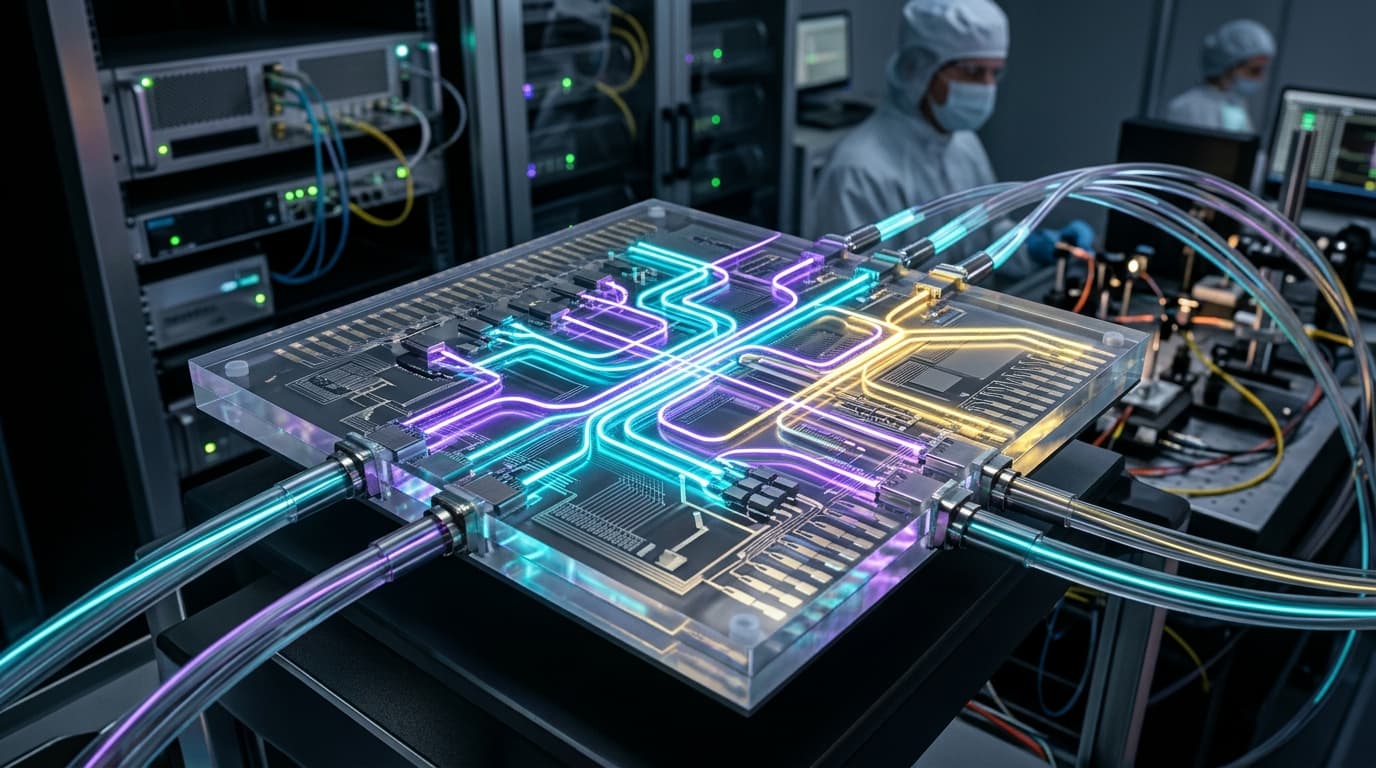
- 1. What Are Neuromorphic Spiking Neural Networks (SNNs)?
- 2. Von Neumann Bottleneck vs. Neuromorphic Architecture
- 3. Temporal Event-Driven Coding & Leaky Integrate-and-Fire (LIF)
- 4. Neuromorphic Silicon Processors Compared (2026 Benchmark)
- 5. Step-by-Step Edge SNN Deployment Framework
- 6. Frequently Asked Questions (FAQ)
Key Architecture Insights
- End of Power-Hungry Continuous Ingestion: Conventional Deep Neural Networks (DNNs) execute matrix operations non-stop across static clock cycles. In contrast, 2026 Spiking Neural Networks process asynchronous, sparse "spikes" strictly when state transitions occur.
- Sub-Milliwatt Power Efficiency: SNNs deliver 100x to 1,000x lower energy consumption per inference compared to GPUs, enabling continuous on-device AI in robotics, aerospace, and medical implants.
- Co-Located Compute & Synaptic Memory: Neuromorphic chips eliminate the Von Neumann memory wall by merging non-volatile memristive storage and processing directly at the artificial neuron junction.
- Native Temporal Dynamics: Time is an intrinsic dimension in SNNs, providing unparalleled real-time processing of high-speed event camera data, audio spectrograms, and biosensor telemetry.
What Are Neuromorphic Spiking Neural Networks (SNNs)?
Neuromorphic Spiking Neural Networks (SNNs) are third-generation artificial neural network architectures implemented on non-Von Neumann silicon that mimic the biological brain's electrophysiological signaling. Rather than transmitting continuous floating-point activations, SNNs communicate asynchronously via discrete temporal binary pulses (spikes) only when cellular membrane thresholds are breached.
Throughout the generative AI expansion of 2024 to 2026, enterprise data centers collided directly with the thermal and power grid wall. Standard dense transformer models demand hundreds of watts per GPU to perform millions of continuous floating-point multiply-accumulate (MAC) calculations—even when analyzing static camera feeds or baseline sensor signals.
The biological human brain, conversely, performs complex multimodal reasoning, real-time spatial navigation, and sensory integration while consuming merely 20 watts of power. Neuromorphic engineering translates this biological efficiency into silicon hardware.
To explore how distributed autonomous swarms coordinate these ultra-low-power intelligent nodes, review our architectural guide on Autonomous Multi-Agent AI Swarms in 2026.
Von Neumann Bottleneck vs. Neuromorphic Architecture
Traditional microprocessors (CPUs, GPUs, and standard NPUs) adhere strictly to the classical Von Neumann computer architecture: compute units (ALUs) and memory banks (DRAM/SRAM) sit on physically separated partitions connected by a bus.
In deep learning inference, moving weight tensors back and forth across this memory bus consumes up to 80% of total system energy—the infamous "Memory Wall."
Neuromorphic computing shatters this paradigm through in-memory crossbar arrays:
[ Traditional Von Neumann Architecture ]
+--------------+    Continuous Bus Shuttling    +--------------+
| Memory (DRAM)| <============================> | Compute (GPU)|
+--------------+     (Consumes 80% Energy)      +--------------+

[ 2026 Neuromorphic In-Memory Architecture ]
+--------------------------------------------------------------+
| Integrated Synaptic Memristor Matrix                         |
| +-------------------+  Asynchronous Spikes  +--------------+ |
| | Synapse (Weight)  | --------------------> | Soma (State) | |
| | (Local Memory)    | < - - - Plasticity - -| (Threshold)  | |
| +-------------------+                       +--------------+ |
+--------------------------------------------------------------+
  (Zero Memory-Bus Shuttling | Event-Driven Energy Dissipation)
By placing physical memristors (resistive RAM or phase-change memory) directly alongside leaky integrate-and-fire circuits, neuromorphic cores consume energy only when a spike traverses the junction.
For details on optical and photonic interconnects that further eliminate thermal resistance in compute clusters, explore our deep dive on Silicon Photonics & Optical Interconnects.
Temporal Event-Driven Coding & Leaky Integrate-and-Fire (LIF)
In biological nervous systems, information is encoded not merely in the amplitude of electrical potential, but in the exact arrival timing of action potentials.
The prevailing mathematical model powering 2026 SNN production edge engines is the Current-Based Leaky Integrate-and-Fire (CUBA-LIF) neuron:
$$\tau_m \frac{dV(t)}{dt} = -(V(t) - V_{\text{rest}}) + R_m I(t)$$
- Integration Phase: When incoming spikes arrive, the membrane potential $V(t)$ charges upward.
- Leakage Phase: In the absence of incoming spikes, $V(t)$ decays exponentially toward resting state $V_{\text{rest}}$ governed by time constant $\tau_m$.
- Firing & Refractory Phase: When $V(t) \ge V_{\text{th}}$, the neuron emits a discrete binary pulse $S(t) = 1$, instantly resets to $V_{\text{reset}}$, and enters a temporary refractory window.
Because data is processed as sparse temporal spikes, neuromorphic processors interface natively with Event Cameras (Dynamic Vision Sensors - DVS). Instead of capturing 60 redundant video frames per second, a DVS pixel emits a microsecond timestamped spike only when light intensity changes, reducing video pipeline bandwidth by over 99%.
Neuromorphic Silicon Processors Compared (2026 Benchmark)
| Silicon Platform | Architecture Type | Neurons / Core Density | Primary Target Workload | Average Active Power |
|---|---|---|---|---|
| Intel Loihi 3 (2026) | Asynchronous Digital Spiking Mesh | 2M Neurons / 256M Synapses | Adaptive robotics, spatial SLAM, tactile sensing | 1.5 mW – 15 mW |
| SynSense Speck 2E | Mixed-Signal Analog-Digital SNN | 320K Neurons + Integrated DVS | Micro-drone vision, wearable gaze tracking | 0.8 mW – 3.2 mW |
| BrainChip Akida 2.0 | Event-Domain Digital Core Array | 1.2M Configurable Nodes | Industrial vibration diagnostics, audio wakeword | 2.5 mW – 20 mW |
| Nvidia Jetson Orin Nano (Baseline GPU) | Synchronous Von Neumann Tensor Core | N/A (Standard FP16 / INT8) | Dense LLM / Convolutional models | 7,000 mW – 15,000 mW |
Step-by-Step Edge SNN Deployment Framework
Temporal Sensor Stream Ingestion
Configure event cameras, bio-impedance sensors, or vibration accelerometers with asynchronous edge interfaces (MIPI-CSI or SPI event streamers) to bypass frame buffers.
Surrogate Gradient Training / ANN-to-SNN Conversion
Train the network using spatio-temporal backpropagation with continuous surrogate gradients (e.g., FastSigmoid or ArcTan) using frameworks like SpikingJelly or Lava.
Synaptic Weight Quantization & Memristor Mapping
Quantize floating-point synaptic weights down to 4-bit or ternary (-1, 0, +1) integer representations and map them directly into neuromorphic crossbar hardware registers.
On-Chip Local Spike-Timing-Dependent Plasticity (STDP)
Activate decentralized Hebbian learning rules on edge chips, enabling physical robots and sensors to continuously adapt to mechanical wear without round-tripping to cloud servers.
For details on managing algorithmic liquidity and funding for deep-tech hardware deployments, explore our institutional analysis on Autonomous Corporate Treasury Management.
Frequently Asked Questions (FAQ)
What is the difference between an Artificial Neural Network (ANN) and a Spiking Neural Network (SNN)?
Standard ANNs pass continuous decimal values (activations) in lockstep across synchronized layers, consuming substantial energy regardless of data changes. SNNs communicate asynchronously using discrete binary spikes over time, consuming power only when state changes occur, mimicking the biological brain's metabolic conservation.
Why are Spiking Neural Networks so energy-efficient?
SNNs achieve energy efficiency through extreme temporal sparsity. In typical edge applications, 95% to 99% of neurons remain silent at any given millisecond. Furthermore, computing across binary spikes eliminates complex floating-point multiplications, replacing them with simple memory addition operations.
Can neuromorphic chips run large language models (LLMs)?
While dense matrix-multiplication transformer LLMs were engineered for GPUs, 2026 hybrid neuromorphic architectures run quantized linear recurrent models and spike-based state-space models (like Spike-Mamba) with dramatically lower latency and energy consumption.
What are Dynamic Vision Sensors (DVS) and why do they pair with SNNs?
Dynamic Vision Sensors (event cameras) capture changes in light intensity per pixel rather than taking standard frame-based pictures. Each pixel fires independent, microsecond-accurate spikes when brightness shifts, creating an asynchronous event stream that feeds directly into neuromorphic SNN circuits.
How are SNNs trained if the spike step function is non-differentiable?
Modern machine learning overcomes the non-differentiability of the Heaviside step function by using surrogate gradient descent. During the backward pass, a smooth continuous function (such as a derivative of hyperbolic tangent or sigmoid) substitutes for the non-differentiable threshold.
- Davies, M., et al. (2026). Advancements in Neuromorphic Silicon: Asynchronous Architectures and Energy Scaling in Edge Intelligence. IEEE Micro, 46(2), 52–68. doi:10.1109/MM.2026.104209
- Nature Computational Science. (2026). Spatio-Temporal Backpropagation and Neuromorphic Event Processing in Autonomous Systems. Nature Comp Sci, 6(4), 215–231.
- International Neuromorphic Systems Consortium (INSC). (2026). Standard Specification for Event-Based Spike Encoding Protocols (EBP-v2.1).
Level Up Your AI & Solo-Founder Strategy
Join 15,000+ founders and engineers getting our field-tested playbooks on autonomous agents, Micro-SaaS architecture, and lean financial frameworks every Thursday.

Specialist in quantum computing, neural networks, and next-generation computational architectures with over 12 years of research and industry consulting experience.
Related Articles

Autonomous Multi-Agent AI Swarms in 2026: A2A Protocols, Consensus Frameworks & Enterprise Orchestration

Post-Quantum Cryptography Migration: The NIST FIPS 203/204/205 Enterprise Blueprint (2026)
Synthetic DNA Data Storage & Molecular Computing: Solving the Exabyte Archival Crisis in 2026