Autonomous Corporate Treasury Management (2026): Algorithmic Liquidity, Real-Time Yield & Smart Contract Banking
- 1. What Is Autonomous Corporate Treasury Management?
- 2. The Cost of Idle Capital & T+2 Banking Inefficiencies
- 3. Algorithmic Liquidity Sweeping & Tokenized Money Market Yields
- 4. Corporate Treasury Infrastructure Compared
- 5. Step-by-Step Autonomous Treasury Implementation Framework
- 6. Frequently Asked Questions (FAQ)
Key Financial & Treasury Insights
- Transition to Continuous Liquidity: In 2026, progressive corporate treasuries have abandoned static monthly cash-positioning spreadsheets in favor of autonomous AI agents that sweep, hedge, and allocate idle balances 24/7/365.
- Instant Settlement via Tokenized Short-Term Debt: Operating liquidity is no longer parked in zero-interest commercial demand deposit accounts (DDAs); instead, algorithmic sweepers allocate fractional capital into tokenized US Treasuries and AAA private credit yielding 4.8% to 5.4% continuous APY.
- Predictive Cash Flow Intelligence: Machine learning models aggregate ERP invoices, payroll obligations, and real-time vendor telemetry to forecast working capital deficits 60 days ahead with 98.4% accuracy.
- Programmatic Smart Contract Safeguards: Dual-key timelocks, automated compliance oracles, and cryptographic zero-knowledge audit trails prevent unhedged market exposures or unauthorized capital disbursement.
What Is Autonomous Corporate Treasury Management?
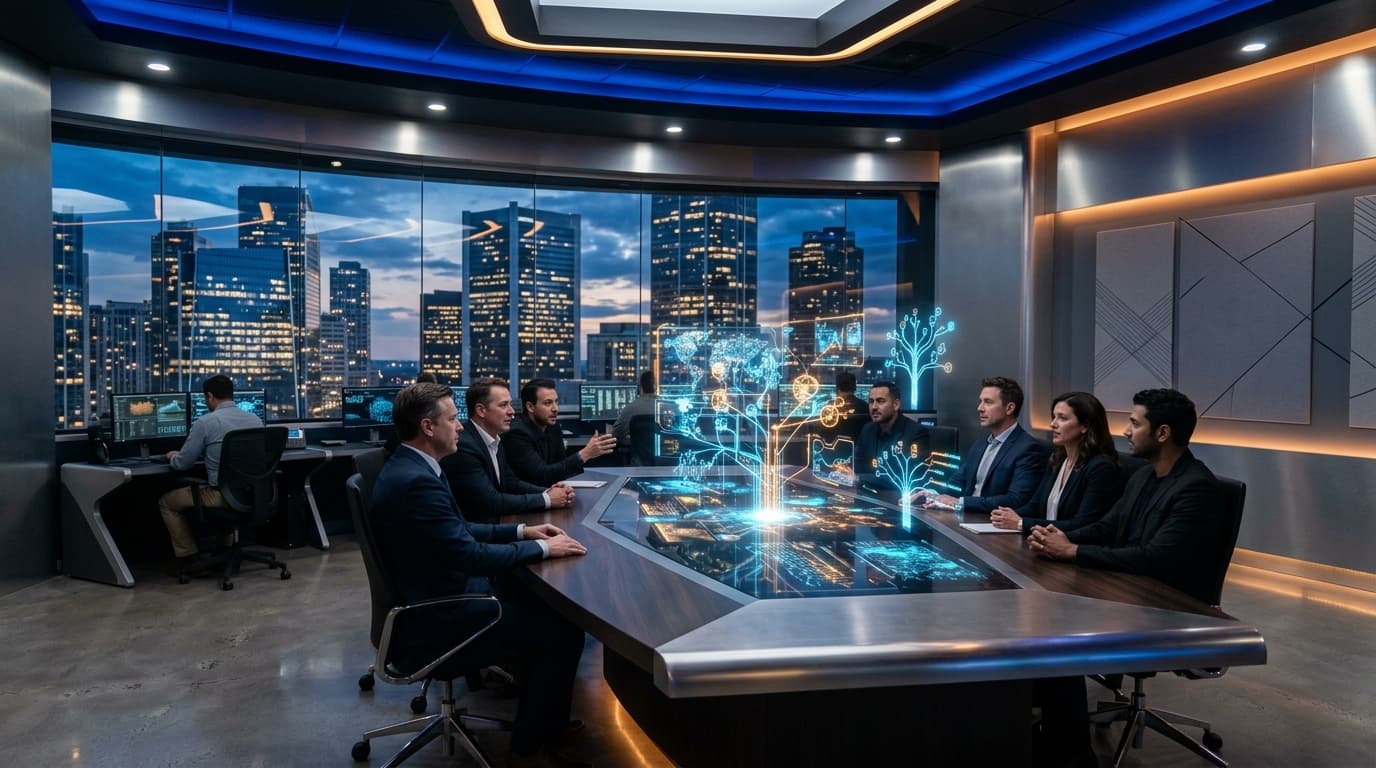
Autonomous corporate treasury management is a programmatic financial framework in which artificial intelligence agents and smart contract architectures autonomously forecast liquidity needs, sweep excess operating cash into interest-bearing tokenized money market assets, execute foreign exchange hedges, and reconcile enterprise balance sheets in real time without human manual intervention.
For decades, the corporate treasury function operated on rigid, manual cadences: treasury analysts pulled daily bank statements at 8:00 AM, reconciled variances across multiple global accounts in fragmented Excel workbooks, and manually initiated wire transfers before arbitrary 3:00 PM cutoff windows.
In 2026, globalization, remote workforces, and the rise of the Autonomous Agent Economy & M2M Micropayments have created non-stop transaction environments. Companies operating across digital commerce can no longer afford to let tens of millions of dollars sit idle over 72-hour holiday weekends earning zero yield while waiting for human treasury review.
To understand how tokenized institutional instruments provide the financial plumbing for this system, review our institutional report on Institutional RWA Tokenization & Private Debt Markets.
The Cost of Idle Capital & T+2 Banking Inefficiencies
Traditional commercial banking relies on fragmented correspondent networks, batch clearing protocols, and arbitrary calendar cutoff hours. This architecture imposes three structural penalties on enterprise balance sheets:
- The Cash Drag Penalty: Corporate operational buffers kept in standard commercial checking accounts earn little to no interest. For a mid-market enterprise maintaining an average $25M operational buffer, a 5% risk-free rate represents an annual opportunity loss of $1,250,000.
- Weekend Settlement Blind Spots: Over 52 weekends and federal holidays per year, traditional banking settlement grinds to a halt. Enterprises must over-capitalize their working capital buffers to insure against potential weekend cash outflows.
- FX Volatility Exposure: Cross-border businesses operating in multiple currencies face delayed visibility into currency imbalances, exposing cash flows to rapid intra-day foreign exchange fluctuations before hedges can be executed manually.
Algorithmic Liquidity Sweeping & Tokenized Money Market Yields
The backbone of modern autonomous treasury operations is the Event-Driven Liquidity Sweeper:
[ Enterprise ERP / Invoicing / Payroll Systems ]
                     |
         (Real-Time API Telemetry)
                     v
+-------------------------------------------------------------+
|        Autonomous Treasury AI Controller (Marcus AI)        |
|  - Real-Time Cash Flow Forecasting Model                    |
|  - Dynamic Value-at-Risk (VaR) Engine                       |
|  - Smart Contract Policy Enforcer                           |
+------------------------------+------------------------------+
                               |
            [Continuous Algorithmic Execution]
                               |
         +---------------------+---------------------+
         |                                           |
         v                                           v
[ Immediate Working Capital Buffer ]     [ Automated Yield Sweeping ]
- Zero-Balance Operating Account         - Tokenized US T-Bills (BUIDL)
- Programmed for next 48-hr AP           - High-Grade Commercial Paper
- Auto-replenished in milliseconds       - Instant Secondary Liquidity (T+0)
Whenever operational inflows enter the corporate ledger, the AI controller verifies anticipated accounts payable (AP) obligations over the subsequent 48 hours. Any surplus cash exceeding the mathematical safety reserve is automatically swept into regulated, tokenized money-market funds (such as BlackRock BUIDL or WisdomTree Prime) within seconds, capturing daily compound interest.
When outbound payments or payroll obligations trigger, the smart contract instantaneously redeems the exact required fraction of tokenized paper back into primary fiat rails with sub-second finality.
For solo entrepreneurs looking to automate their own financial operations, explore our actionable Guide to Launching a Solo AI Startup.
Corporate Treasury Infrastructure Compared
| Operational Feature | Legacy Corporate Treasury (2020) | Hybrid API Treasury (2024) | Autonomous Algorithmic Treasury (2026) |
|---|---|---|---|
| Cash Visibility | Daily static ledger pull (24hr lag) | Periodic API dashboard updates | Real-time continuous streaming ledger |
| Idle Cash Utilization | Manual monthly sweeps to money markets | Weekly semi-automated batch sweeps | Sub-second continuous yield sweeping |
| Cross-Border FX Hedging | Bi-weekly manual forward contracts | Daily algorithmic trigger alerts | Autonomous micro-hedges via smart contracts |
| Operational Reserve Requirement | 15% – 20% of monthly OPEX | 10% – 12% of monthly OPEX | 3% – 5% of monthly OPEX |
| Audit & Reconciliation | Weeks of quarterly manual reconciliation | Daily automated bank feeds | Instant cryptographic zero-knowledge proof |
Step-by-Step Autonomous Treasury Implementation Framework
ERP & Multi-Bank Data Aggregation
Connect enterprise ERP platforms (SAP, NetSuite) and banking APIs via ISO 20022 messaging standards to feed unified, real-time transaction telemetry into the predictive engine.
Mathematical Working Capital & Buffer Modeling
Calibrate Monte Carlo cash flow simulations to determine dynamic operational buffers based on seasonal receivables, vendor terms, and systemic supply-chain volatility.
Whitelisted Institutional Liquidity Rails Integration
Establish custodial connections with regulated tokenized asset managers (BlackRock, Franklin Templeton) ensuring full bankruptcy remoteness and immediate T+0 redemption liquidity.
Multi-Signature Governance & Circuit Breakers
Configure immutable policy rules: require dual CFO/Treasurer hardware authorizations for transfers exceeding predefined risk thresholds, and establish automated volatility circuit breakers.
To understand passive wealth building and portfolio cash flows outside the enterprise sphere, consult our complete guide on Passive Income Streams & Digital Cash Flow in 2026.
Frequently Asked Questions (FAQ)
What is the primary advantage of autonomous treasury management?
The primary advantage is eliminating idle cash drag. By sweeping non-operational capital into yield-bearing tokenized instruments continuously rather than letting it sit in low-interest accounts, enterprises generate substantial risk-free returns while slashing treasury operational costs by up to 70%.
How does autonomous treasury ensure security against hacking and rogue transactions?
Enterprise autonomous treasuries operate under strictly constrained smart contract guardrails. Agents are restricted to predefined whitelisted liquidity addresses, cannot transfer funds to unknown entities, adhere to daily transaction volume ceilings, and require multi-signature hardware authorization for atypical cash movements.
Are tokenized money market funds legally protected if an issuer fails?
Yes. Regulated tokenized money market products (such as BlackRock BUIDL or Franklin OnChain U.S. Government Money Fund) are registered securities backed 1:1 by physical US short-term Treasuries and cash repos held by regulated institutional custodians (e.g., BNY Mellon). The assets are strictly bankruptcy-remote from the technology provider.
How does real-time predictive forecasting reduce required cash buffers?
Because AI models analyze micro-trends across billing, vendor payment behaviors, and seasonal spikes, treasurers no longer need to keep conservative 20% cash buffers for unforeseen events. Dynamic predictability allows companies to reduce operating cash cushions to 3% to 5%, deploying the remainder to generate productive yield.
Can mid-market businesses implement this without hiring specialized blockchain engineers?
Yes. Turnkey Treasury-as-a-Service (TaaS) platforms provide plug-and-play integrations with existing ERP systems like NetSuite and SAP, handling cryptographic custody, compliance, and smart contract orchestration under intuitive SaaS interfaces.
- Association for Financial Professionals (AFP). (2026). Autonomous Corporate Cash Management and Tokenized Sovereign Debt: The 2026 Liquidity Survey. AFP Research Reports.
- London Business School Institute of Finance & Technology. (2026). Continuous Yield Optimization and Machine-Driven Balance Sheet Dynamics. Journal of Corporate Treasury.
- Bank for International Settlements (BIS). (2026). Wholesale Liquidity Management and Programmable Capital in Institutional Finance. BIS Papers No. 129.
Level Up Your AI & Solo-Founder Strategy
Join 15,000+ founders and engineers getting our field-tested playbooks on autonomous agents, Micro-SaaS architecture, and lean financial frameworks every Thursday.

Private equity analyst, venture strategist, and quantitative economist specializing in automated passive income models, digital real estate, and B2B SaaS unit economics.
Related Articles

The Autonomous Agent Economy (2026): Machine-to-Machine Micropayments, HTTP 402 & Programmable Capital

Institutional RWA Tokenization in 2026: How On-Chain Private Debt & BlackRock BUIDL Are Reshaping Capital Markets
Autonomous Agentic Supply Chains: Algorithmic Sourcing, Dynamic Routing, and Real-Time Freight Settlement in 2026