Top Quantum Computing Breakthroughs 2026: Logical Qubits, Fault Tolerance, and Real-World Impact
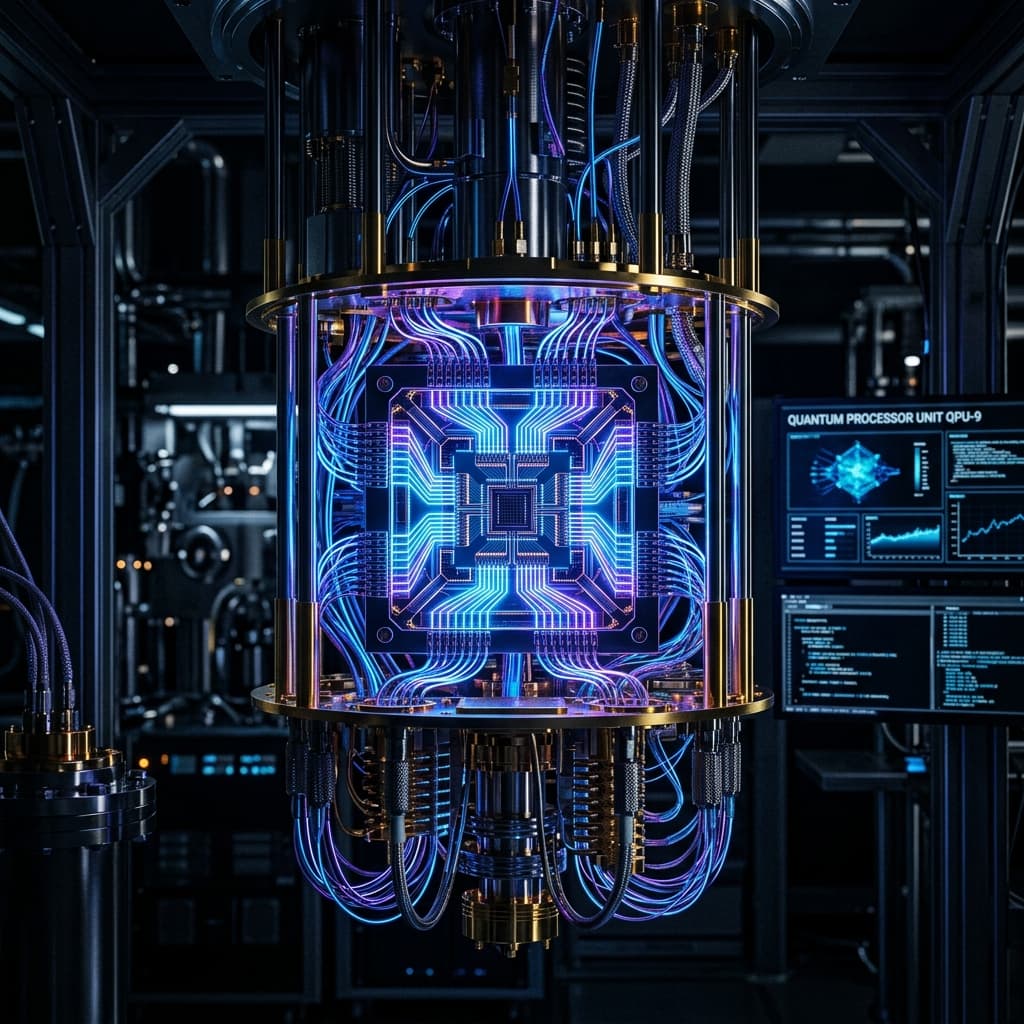
Quantum computing has officially crossed the threshold from experimental laboratory curiosity into industrial reality. In 2026, the tech industry transitioned out of the noisy intermediate-scale quantum (NISQ) era and into the era of fault-tolerant quantum computing. Rather than merely bragging about abstract quantum supremacy in synthetic benchmark tests, hardware engineers and software developers are now tackling intractable commercial challenges across oncology drug discovery, solid-state battery chemistry, and planetary-scale logistics optimization.
Direct Answer for Tech Leaders & Engineers:
The most defining quantum breakthroughs of 2026 include the transition to error-corrected logical qubits (using surface codes to suppress physical qubit noise), the commercialization of hybrid quantum-classical algorithms (VQE and QAOA), and the global enterprise enforcement of Post-Quantum Cryptography (PQC) standards to prevent catastrophic "harvest now, decrypt later" cyberattacks.
From Physical Qubits to Fault-Tolerant Logical Qubits
For the past decade, the fundamental bottleneck holding back quantum computing was qubit decoherence—physical quantum bits being disrupted by minuscule temperature shifts, electromagnetic interference, or cosmic rays.
In 2026, researchers have successfully grouped thousands of noisy physical qubits into reliable, error-corrected logical qubits.
Evolution of Computing Paradigms
| Computing Architecture | Information Unit | Operational Strength | Primary Vulnerability | Commercial Readiness |
|---|---|---|---|---|
| Classical Supercomputers | Binary Bits (0 or 1) |
Deterministic arithmetic, massive sequential throughput | Inability to model exponential combinatorial states | Fully mature |
| NISQ Quantum (2018–2024) | Noisy Physical Qubits | Fast synthetic sampling, proof-of-concept tests | High error rates; operations fail after microseconds | Obsolete laboratory systems |
| Fault-Tolerant Quantum (2026+) | Error-Corrected Logical Qubits | Complex quantum entanglement sustained over hours | Extreme cryogenic refrigeration requirements | Rapidly expanding via enterprise cloud APIs |
3 Real-World Commercial Breakthroughs in 2026
Modern quantum systems are delivering quantifiable economic value across high-complexity industries:
[Molecular Simulation] ➔ Accelerated discovery of room-temperature superconductors & novel enzymes
[Materials Science]    ➔ Designing dendrite-free solid-state EV batteries in days instead of years
[Algorithmic Finance]  ➔ Real-time multi-asset portfolio stress-testing against systemic black swan events
1. High-Fidelity Molecular Simulation in Oncology
Classical supercomputers struggle to simulate even moderately complex molecular structures because electron interactions scale exponentially with each additional atom. Quantum processors natively simulate quantum mechanical electron orbitals, allowing pharmaceutical researchers to model how targeted cancer therapeutics bind with specific proteins in minutes.
2. Solid-State Battery Chemistry
Developing energy-dense solid-state electrolytes historically required years of trial-and-error chemical synthesis in physical labs. Quantum simulations now evaluate millions of chemical lattice combinations virtually, pinpointing ion-conductive ceramics that prevent dendrite formation in electric vehicle batteries.
The Cybersecurity Mandate: Post-Quantum Cryptography (PQC)
The rapid advancement of quantum hardware presents an existential challenge to modern internet security: Shor's algorithm running on a sufficiently powerful quantum machine can dismantle traditional RSA and Elliptic Curve Cryptography (ECC) within hours.
To protect critical infrastructure, enterprises and governments have begun mandatory migration to NIST-standardized Post-Quantum Cryptographic algorithms:
- Lattice-Based Key Encapsulation (ML-KEM): Replacing traditional TLS handshakes to ensure encrypted web communications cannot be intercepted and decrypted by future quantum adversaries.
- Stateful Hash-Based Digital Signatures (ML-DSA): Securing software updates, digital passports, and blockchain transaction verification against forgery.
Cloud Democratization: Quantum-as-a-Service (QaaS)
You no longer need a multi-million-dollar dilution refrigerator cooled to 15 millikelvin to harness quantum computational power. Major cloud providers and quantum startups offer on-demand API access via Python-based SDKs (such as Qiskit and Cirq). Developers can write quantum circuits on standard laptops, dispatching execution jobs to real superconducting, trapped-ion, or photonic quantum hardware in the cloud.
Frequently Asked Questions (FAQ)
Can quantum computers replace standard desktop computers or smartphones?
No. Quantum computers are specialized accelerators designed specifically for complex combinatorial problems, physical simulations, and discrete mathematics. Everyday computing tasks—like video playback, web browsing, and word processing—remain far more efficient on classical silicon microprocessors.
When will quantum computers completely break Bitcoin and banking encryption?
Current fault-tolerant systems still lack the millions of physical qubits necessary to break standard 2048-bit RSA keys. However, because hostile actors are already executing "harvest now, decrypt later" campaigns, global financial networks are transitioning to quantum-safe protocols today.
Level Up Your AI & Solo-Founder Strategy
Join 15,000+ founders and engineers getting our field-tested playbooks on autonomous agents, Micro-SaaS architecture, and lean financial frameworks every Thursday.

Specialist in quantum computing, neural networks, and next-generation computational architectures with over 12 years of research and industry consulting experience.