Spatial Computing: Beyond the Headset
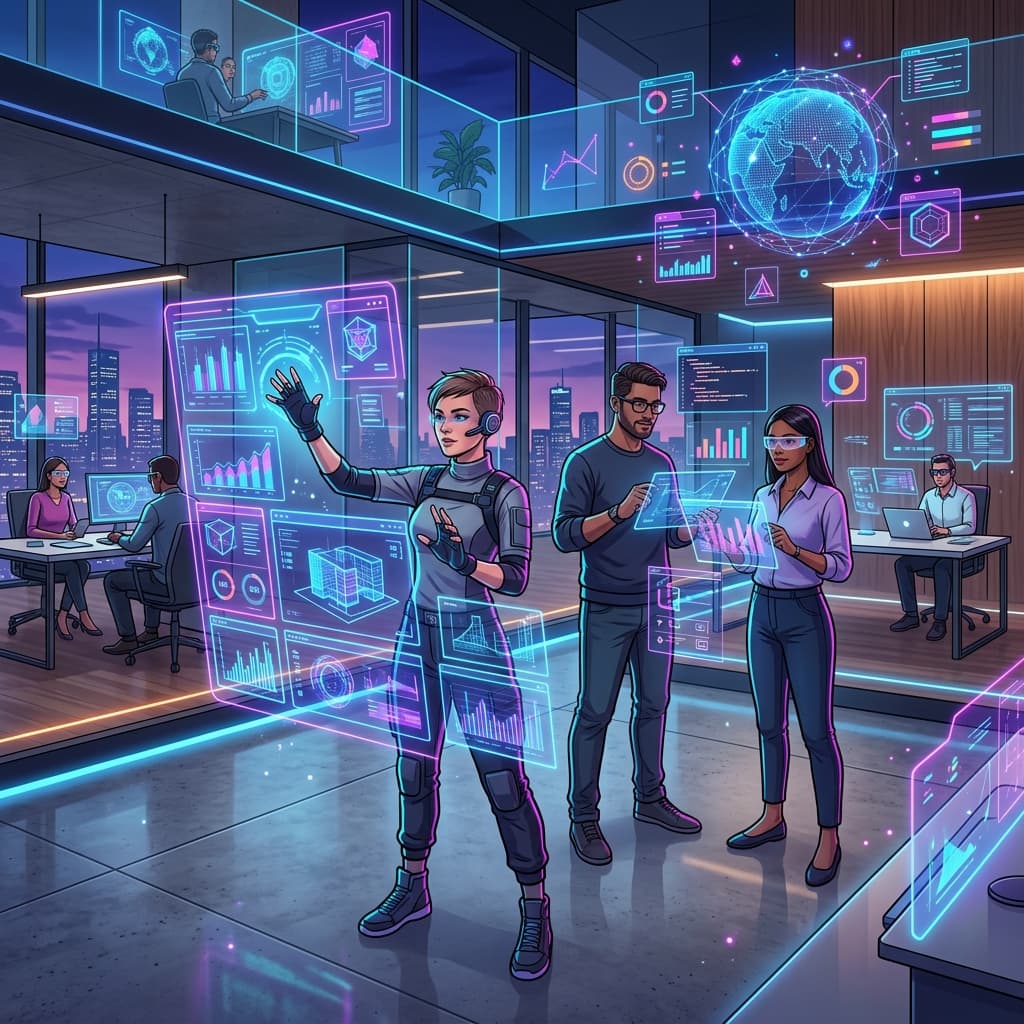
The term Spatial Computing was heavily popularized a few years ago with the launch of high-end mixed reality headsets. However, as we move through , the technology is rapidly outgrowing the bulky hardware of its infancy. Spatial computing is no longer just about strapping a screen to your face; it's about computing that fluidly interacts with the 3D world around us.
The Evolution of Hardware
While headsets remain popular for immersive gaming and specialized industrial training, the frontier of spatial computing is shifting towards ambient and wearable technology.
- Smart Contact Lenses: Prototype lenses are now capable of projecting micro-LED displays directly onto the retina, offering a true augmented reality experience without the social stigma of smart glasses.
- Ambient Projection: Smart environments can now track your gaze and project interactive digital interfaces onto physical surfaces—like turning your kitchen counter into a recipe dashboard.
Real-World Applications Transforming Industries
Spatial computing is fundamentally changing how we work, learn, and heal.
- Surgical Precision: Surgeons now overlay 3D MRI scans directly onto a patient's body during operations in real-time, drastically reducing error rates.
- Architectural Design: Architects can walk clients through a fully realized, 1:1 scale digital twin of a building on an empty lot before a single brick is laid.
- Retail Experiences: Imagine walking into a grocery store and seeing personalized nutritional information and navigation arrows floating directly above the aisles.
The Privacy Paradigm
With spatial computing, devices must constantly map their surroundings using cameras, LiDAR, and spatial audio sensors. This raises unprecedented privacy concerns. If your glasses are mapping your living room to place a digital TV on the wall, who owns that 3D map of your home?
"The killer app for spatial computing isn't a game; it's the seamless integration of digital utility into physical reality, requiring zero friction from the user."
Frequently Asked Questions (FAQ)
Q: Do I need a VR headset to experience spatial computing? A: No. While headsets are the most well-known method, new technologies like LiDAR-equipped smartphones and ambient projectors are bringing spatial computing to everyday devices.
Q: Is spatial computing the same as the Metaverse? A: They are related, but distinct. The Metaverse implies a persistent, shared digital world. Spatial computing is the technology that allows us to interact with digital information in 3D space, whether it's connected to a broader Metaverse or just a localized application.