Liquid Neural Networks: The Breakthrough in Adaptive Edge AI and Robotics

Traditional deep learning models suffer from a fundamental limitation: once trained, their parameters remain rigidly static. While transformers and convolutional networks excel at processing frozen datasets or predictable inputs, they frequently fail when deployed in unpredictable physical environments—such as turbulent drone flights, dynamic surgical robotics, or shifting industrial assembly lines. Enter Liquid Neural Networks (LNNs), an innovative class of continuous-time machine learning architectures that adapt their behavior on the fly, mimicking the resilient neural adaptability of living organisms.
What Are Liquid Neural Networks? (Core Architecture and Definition)
A Liquid Neural Network is a dynamic bio-inspired neural architecture governed by non-linear differential equations that allow both its internal states and synaptic connection weights to change continuously over time. Originally inspired by the microscopic nervous system of the nematode worm C. elegans, LNNs do not process data in discrete, fixed computational steps. Instead, they treat incoming telemetry streams as smooth, uninterrupted time series.
Key Architectural Advantages
- Infinite Time-Scale Adaptability: Capable of handling fluctuating sample rates and missing sensor data without retraining or degradation.
- Drastic Parameter Compression: Solves complex navigational and control tasks using hundreds or thousands of parameters instead of the millions required by deep reinforcement learning models.
- Intrinsic Causal Interpretability: Because the network is grounded in differential mathematics, engineers can mathematically trace decision pathways, eliminating the "black-box" risk common to massive foundation models.
How Liquid AI Outperforms Traditional Deep Learning in the Physical World
1. Robustness Against Out-of-Distribution Shocks
Conventional autonomous systems fail when encountering scenarios outside their training distribution—such as sudden solar glare blinding a camera lens, heavy snowfall, or unexpected hardware motor wear. Because an LNN's synaptic conductance adjusts dynamically based on input velocity and variance, the model adapts in real time, maintaining navigational trajectory even when sensor feeds are heavily degraded.
2. Radical Energy Efficiency for Edge Hardware
Running heavy transformer models on battery-constrained edge platforms—such as agricultural delivery drones or search-and-rescue quadcopters—rapidly depletes power reserves. Liquid neural networks achieve high-speed closed-loop control using minimal memory footprints and microscopic wattage, allowing complex AI agency to run directly on low-power microcontrollers without cloud connectivity.
3. Continuous Learning Without Catastrophic Forgetting
In classical neural networks, fine-tuning on new data overwrites previously acquired capabilities—a phenomenon known as catastrophic forgetting. LNNs isolate temporal adaptation to specific dynamical state variables, allowing autonomous robots to learn localized environmental dynamics while preserving core safety guardrails.
Transforming Next-Generation Autonomous Industries
- Autonomous Aviation and Drones: Quadcopters guided by liquid AI navigate dense forests, urban canyons, and heavy crosswinds without GPS, processing low-resolution vision feeds at sub-millisecond latencies.
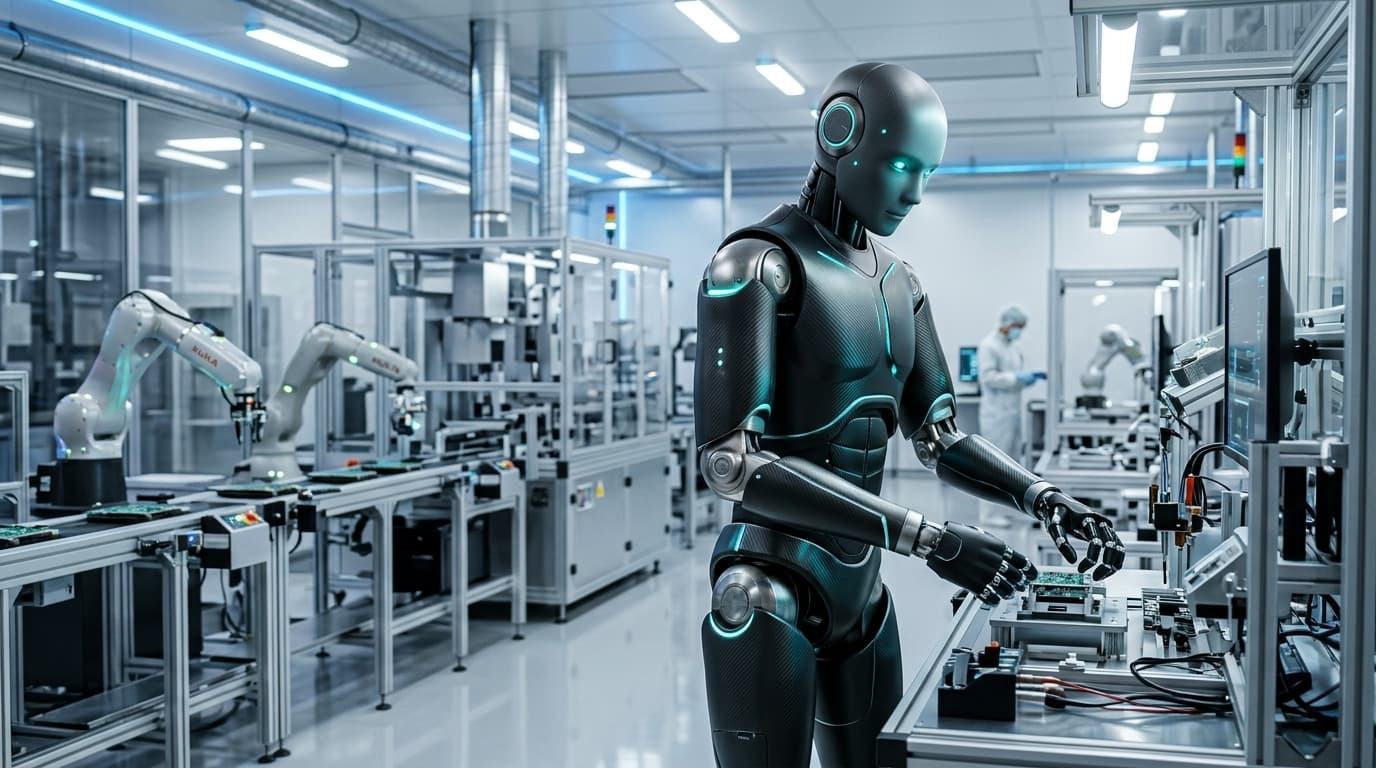
- Humanoid and Industrial Robotics: Humanoid actuators equipped with liquid control algorithms react instinctively to physical disturbances, adjusting balance and grip pressure dynamically when carrying shifting payloads.
- Biomedical Intensive Care Monitoring: Medical telemetry monitors powered by liquid architectures analyze irregular electrocardiograms and respiratory rhythms, predicting sudden cardiac anomalies hours before conventional threshold alerts trigger.
Frequently Asked Questions
What makes Liquid Neural Networks different from Recurrent Neural Networks (RNNs)?
While traditional RNNs update their hidden states at discrete, evenly spaced time intervals, Liquid Neural Networks use continuous-time differential equations, allowing them to adapt seamlessly to irregular time steps, missing data, and continuous sensory inputs.
Why are Liquid Neural Networks so computationally lightweight?
LNNs model the underlying physics of dynamical systems directly rather than approximating them through brute-force parameter stacking. A task requiring a 500,000-parameter convolutional network can often be solved by an LNN with fewer than 50 neurons.
Can Liquid Neural Networks replace Large Language Models?
LNNs are not designed to replace text-generation LLMs. Instead, they excel in time-series processing, sensory-motor control, and real-time physical robotics, often serving as the fast, reactive reflex layer beneath a high-level cognitive language model.