Next-Gen Smart Home Security 2026: AI Edge Vision, Matter Protocols, and Zero-Cloud Privacy
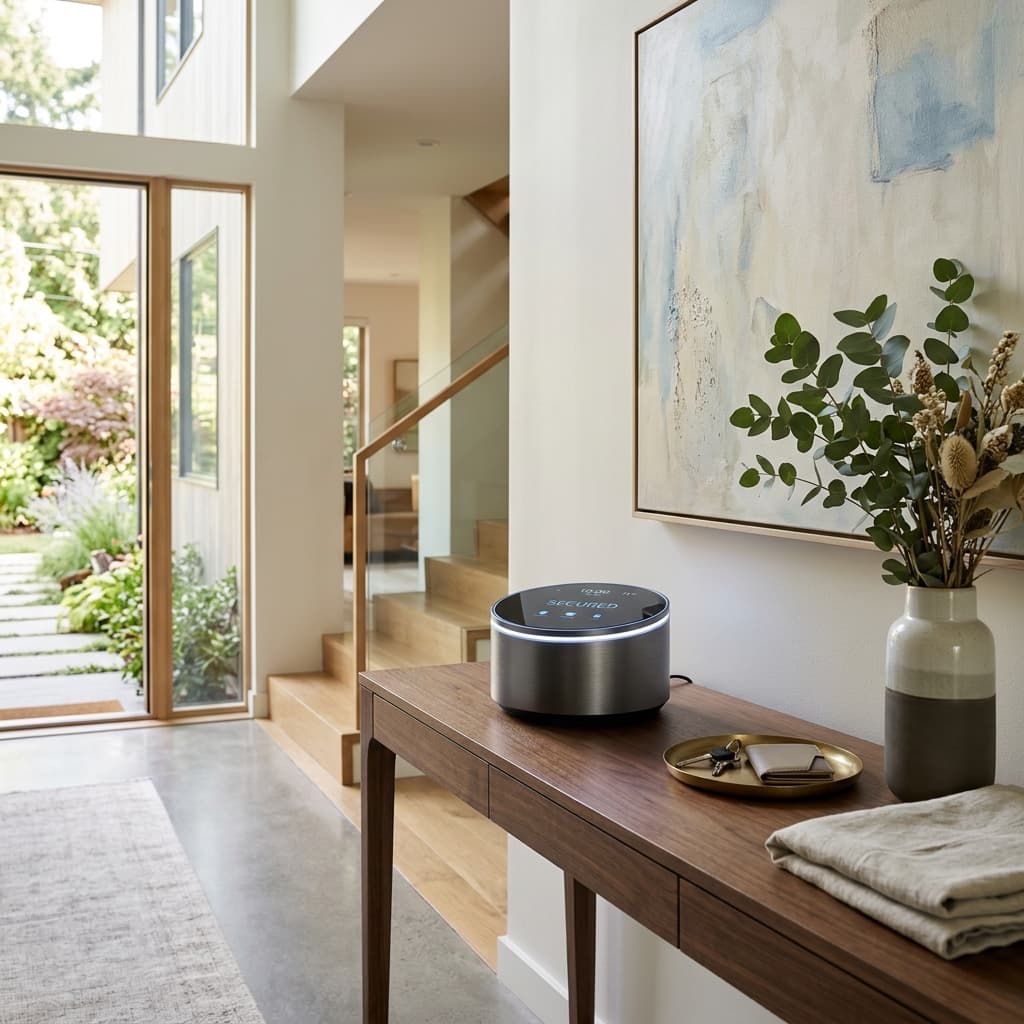
The residential security landscape has undergone a profound revolution. For years, consumer "smart home" security relied on brittle cloud-dependent Wi-Fi cameras, vulnerable passwords, and monthly subscription paywalls that stored intimate household video feeds on remote corporate servers. In 2026, homeowners and privacy advocates are firmly rejecting centralized cloud surveillance in favor of Edge AI smart home architectures, local cryptographic storage, and Matter-over-Thread network isolation.
Direct Answer for Homeowners & Tech Enthusiasts:
Next-generation smart home security in 2026 is defined by on-device Neural Processing Unit (NPU) computer vision, local Network Attached Storage (NAS), and the Matter 2.0 communication standard. By processing facial geometry, package detection, and perimeter intrusions locally on edge microprocessors rather than sending video streams to the cloud, modern systems deliver sub-100ms threat alerts, eliminate monthly camera subscriptions entirely, and ensure that video footage remains 100% impenetrable to external cloud data breaches.
The Death of Cloud Cameras: The Edge AI Paradigm Shift
Traditional consumer cameras (such as legacy Ring or Nest configurations) upload compressed video feeds continuously to third-party cloud infrastructure. This approach creates three massive vulnerabilities: high latency during internet outages, monthly recurring subscription fees, and severe privacy exposure to subpoena requests or cloud database leaks.
In contrast, Edge AI cameras process raw video frames directly on the camera hardware:
[4K Camera Sensor] ➔ [Dedicated On-Device NPU] ➔ [Local Facial/Vehicle Classification] ➔ [Instant Local Siren/Lock Action]
Legacy Cloud Surveillance vs. 2026 Edge AI Smart Home Architecture
| Security Dimension | Legacy Cloud Camera Systems | 2026 Edge AI Architecture | Homeowner Advantage |
|---|---|---|---|
| Video Processing Location | Remote cloud servers (AWS / Google Cloud) | On-device silicon NPU (Neural Processing Unit) | Zero private footage leaves the local premises |
| Internet Outage Reliability | Camera stops recording or alerts fail completely | Full 100% continuous recording & local threat response | Operates uninterrupted during intentional Wi-Fi jams |
| Recurring Subscriptions | $5 to $20 per month per camera | $0 / Month (Completely subscription-free) | Massive long-term hardware cost savings |
| Intrusion Detection Latency | 2,000ms – 5,000ms (Cloud roundtrip transmission) | Under 120ms (Instantaneous local network execution) | Real-time deterrent before an intruder reaches the door |
| False Positive Filtering | High (Triggered by bugs, shadows, moving trees) | 99.8% precision (Trained 3D spatial geometry) | Elimination of notification fatigue |
Matter 2.0 & Network Isolation: Securing Vulnerable IoT Devices
The greatest entry point for residential cyberattacks is not a sophisticated brute-force hack against your personal computer, but rather compromised firmware on cheap smart bulbs, robot vacuums, or thermostats connected directly to your primary Wi-Fi network.
To combat this, the 2026 residential standard enforces strict VLAN Network Segmentation and Matter-over-Thread:
- Virtual LAN (VLAN) Micro-Segmentation: Separating your home network into three isolated digital zones: Primary Devices (laptops, phones, banking), Guest Wi-Fi, and an air-gapped IoT Subnet with zero outbound internet access.
- Local Matter-over-Thread Mesh: Matter-certified smart locks and sensors communicate directly with a local hub over low-power Thread mesh networks using local IPv6 routing, removing the need for external vendor cloud APIs.
3 Automated Autonomous Threat Mitigation Protocols
Modern security systems no longer wait for a human to answer a smartphone notification at 3:00 AM. They deploy automated defensive workflows:
- Perimeter Intruder Geofencing: When unfamiliar facial geometry or suspicious lingering is detected at a property boundary between 11:00 PM and 06:00 AM, outdoor spotlight arrays activate progressively while smart deadbolts automatically trigger across all exterior doors.
- Biometric Jam Resistance: Door access systems combine 3D infrared facial recognition with palm vein biometrics, rendering 2D photo spoofing and thermal passcode reconstruction physically impossible.
- Smart Water & Energy Shutoffs: IoT flow meters integrate with home alarm hubs. If an acoustic glass-break or pipe burst is detected, main water valves close automatically to prevent catastrophic residential flooding.
Frequently Asked Questions (FAQ)
Can an edge-based smart security system send alerts to my phone while I am away from home?
Yes. Secure edge hubs (such as Home Assistant Yellow or Apple HomeKit Secure Video hubs) utilize encrypted peer-to-peer tunnels (like WireGuard) to transmit push notifications and encrypted video clips directly to your phone without storing unencrypted data on commercial cloud servers.
Are wireless smart cameras vulnerable to Wi-Fi jammers used by burglars?
Budget Wi-Fi cameras are vulnerable, but modern 2026 systems utilize Power over Ethernet (PoE) or dual-band Thread mesh with integrated local SD storage that triggers an immediate acoustic alert if wireless signals are suddenly disrupted.
Level Up Your AI & Solo-Founder Strategy
Join 15,000+ founders and engineers getting our field-tested playbooks on autonomous agents, Micro-SaaS architecture, and lean financial frameworks every Thursday.

Specialist in quantum computing, neural networks, and next-generation computational architectures with over 12 years of research and industry consulting experience.
Related Articles

Quantum Computing Basics Explained: A Clear Guide for Beginners

The Best AI Tools 2026: Top Productivity, Autonomous Agents, and Developer Stacks

The Future of Artificial Intelligence (2026-2027): Agentic Swarms, Reasoning Models, and Embodied Physical AI