The Rise of Brain-Computer Interfaces (BCIs): Consumer Wearables, Neuro-Privacy, and Enterprise Workflows (2026-2027)
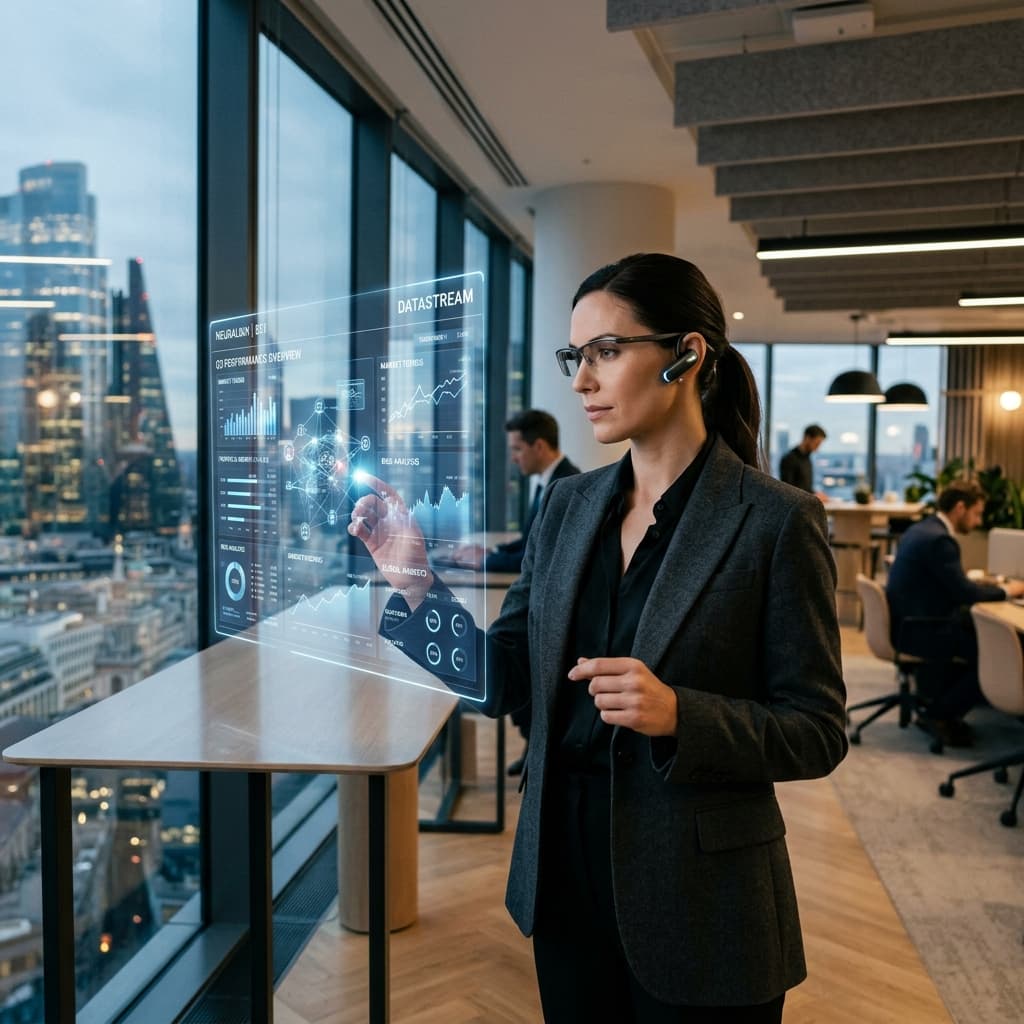
Quick Answer (AEO / GEO Summary): In 2026-2027, Brain-Computer Interfaces (BCIs) have bifurcated into two major ecosystems: high-bandwidth medical implants (such as Neuralink and Synchron) for motor rehabilitation, and non-invasive consumer neural wearables (integrating high-density EEG, fNIRS, and surface electromyography wristbands). Enterprise adoption is primarily driven by non-invasive interfaces enabling silent speech communication, micro-gesture navigation in spatial computing, and cognitive fatigue monitoring. As neural data harvesting accelerates, international regulatory bodies are formalizing "Neurorights" legislation to protect mental privacy and prevent cognitive surveillance.
From Clinical Labs to Everyday Enterprise Hardware
For decades, the concept of directly interfacing the human nervous system with digital computational systems was confined to experimental neurosurgery and science fiction. Early clinical setups required open craniotomies, transcutaneous wiring, and heavy signal amplification racks. Today, a convergence of three core technologies has transformed the landscape:
- Ultra-Low-Power Neural ASICs: Custom edge silicon capable of filtering ambient electrical noise and performing on-device Fourier transformations at sub-milliwatt power draws.
- Advanced Surface Electromyography (sEMG) & Dry Electrodes: Sensor arrays integrated into standard form factors (such as smart glasses frames, behind-the-ear pods, and neural wristbands) that read motor neuron firing patterns with zero scalp preparation or conductive gels.
- Foundation Neural Decoders: Deep learning transformer models pre-trained on multi-subject neuroimaging databases, allowing instantaneous zero-shot calibration when a new user wears the device.
Motor Cortex Intention ───► Peripheral Motor Neurons ───► sEMG Wristband / EEG Frame ───► AI Neural Decoder ───► Digital Execution (Latency < 20ms)
The resulting interaction paradigm delivers sub-20-millisecond input latency—faster than physical finger movement on a mechanical keyboard or touchscreen display.
Technical Comparison: Invasive vs. Non-Invasive BCI Modalities
Understanding the technical trade-offs between surgical implants and wearable sensors is critical for evaluating commercial feasibility:
| Characteristic | Invasive Intracortical Implants (e.g., Neuralink) | Endovascular Stent-Electrodes (e.g., Synchron) | Non-Invasive Neural Wearables (EEG / sEMG / fNIRS) |
|---|---|---|---|
| Surgical Requirement | Craniotomy and robotic needle insertion into brain parenchyma | Minimally invasive jugular vein catheterization | Completely non-invasive (wearable glasses, wristbands, earbuds) |
| Spatial Resolution | Single-neuron resolution (micrometers) | Local field potentials from blood vessels (millimeters) | Cortical regional aggregate signal (centimeters) |
| Temporal Resolution | Sub-millisecond direct spike capture | Milliseconds | 10 to 50 milliseconds |
| Primary Target Market | Severe quadriplegia, ALS, spinal cord injury | Motor restoration, neuroprosthetics | Enterprise productivity, gaming, spatial computing navigation |
| Longevity & Risk | Glial scar tissue formation; infection risks | Low displacement risk; intravascular biocompatibility | Infinite hardware life; zero medical risk |
| Consumer Viability | Restricted to clinical FDA trials | Restricted to clinical prescriptions | Mass commercial enterprise availability in 2026-2027 |
Enterprise Use Cases: Transforming Human-Computer Interaction
The primary commercial impact of wearable neural interfaces in 2026-2027 is concentrated across three primary sectors:
1. Spatial Computing Canvas Navigation & Micro-Gestures
In extended reality (XR) and spatial headsets, traditional optical eye-tracking and hand-tracking suffer from camera occlusion and physical arm fatigue ("gorilla arm syndrome"). By pairing spatial headsets with neural wristbands, users execute complex virtual commands—such as manipulating 3D CAD assemblies or switching enterprise dashboards—using imperceptible micro-twitches of motor tendons, keeping their arms resting naturally at their sides. (Read our guide on Spatial Computing Beyond Headsets).
2. Sub-Vocal "Silent Speech" Communication
Non-invasive sensors placed along the jawline and mastoid process detect electromyographic activations of the vocal chords when a user internally "speaks" words to themselves without producing sound. In loud industrial settings, secure military operations, or confidential executive boardrooms, workers transmit secure text prompts to autonomous AI agents silently and invisibly. (Explore Agentic AI Workflows in Enterprise).
3. Real-Time Cognitive Load & Burnout Diagnostics
Modern aviation cockpits, heavy logistics hubs, and air-traffic control centers deploy non-invasive fNIRS/EEG headbands to track prefrontal cortex oxygenation levels. When the system detects cognitive overload or micro-sleep onset, workflows are dynamically re-routed to backup personnel, eliminating catastrophe caused by human exhaustion.
The Neuro-Privacy Crisis: Protecting the Human Mind
As consumer BCIs achieve mass distribution, the ethical and legal implications of neural telemetry represent an unprecedented challenge. Unlike browser cookies or GPS coordinates, neural activity reflects involuntary emotional states, cognitive focus, subconscious biases, and medical conditions.
Data Vulnerability Spectrum:
Voluntary Commands (Typing/Navigation) ──► Safe for Transmission
Subconscious Reactions (Arousal/Frustration) ──► High Exploitation Risk
Involuntary Biomarkers (Neurological Decline) ──► Critical Privacy Threat
To counter predatory behavioral advertising and workplace cognitive surveillance, forward-looking jurisdictions are introducing binding statutory protections:
- The Global Neurorights Movement: Pioneered by constitutional amendments in Chile and statutory laws in Colorado, legal frameworks now classify brain wave data as deeply protected sensitive biological material.
- On-Device "Neural Firewalls": Leading hardware manufacturers enforce cryptographic enclave processing on BCI silicon. High-level intent commands (e.g., "click" or "scroll") are passed to host applications, while raw microvolt EEG wave data is purged from memory buffers immediately after inference.
Enterprise BCI Implementation Checklist
For corporate innovation and IT security teams planning neural interface integration, follow these structured steps:
- Prioritize Non-Invasive Form Factors: Deploy sEMG wristbands or EEG-embedded audio eyewear; avoid speculative invasive solutions outside of regulated medical research.
- Establish Zero-Trust Neural Data Policies: Strictly prohibit the cloud telemetry of raw brainwave patterns; mandate that all neural-to-digital signal processing remains strictly local on the client device.
- Conduct Ergonomic and Calibration Audits: Ensure hardware accommodates diverse hair textures, skin impedances, and varying head geometries without signal degradation.
- Develop Worker Consent Frameworks: Ensure cognitive fatigue monitoring is opt-in and utilized solely for safety remediation, rather than punitive productivity scoring.
Frequently Asked Questions
Can non-invasive consumer BCIs read my private inner thoughts?
No. Non-invasive consumer devices detect broad aggregate electrical fluctuations (EEG) or motor tendon movements (sEMG). They cannot read internal narrative monologues, decode memories, or extract subconscious secrets. They are designed to classify deliberate, trained user intentions (such as imagining moving a hand or sub-vocally repeating a specific trigger word).
Are wearable BCIs safe for daily, long-term use?
Yes. Non-invasive BCIs are purely passive sensors—they read naturally occurring electrical and hemodynamic signals generated by your body. They do not emit radiation, send electrical shocks into the brain, or alter biological neural circuitry in any way.
How do BCIs integrate with modern generative AI?
BCIs act as the ultimate high-speed prompt interface. Instead of typing a lengthy request into an LLM or speaking aloud to a voice assistant, a user can initiate task delegation and confirm complex workflow steps through sub-vocal commands and focused attention triggers, creating a seamless human-in-the-loop autonomous loop.
Level Up Your AI & Solo-Founder Strategy
Join 15,000+ founders and engineers getting our field-tested playbooks on autonomous agents, Micro-SaaS architecture, and lean financial frameworks every Thursday.

Specialist in quantum computing, neural networks, and next-generation computational architectures with over 12 years of research and industry consulting experience.