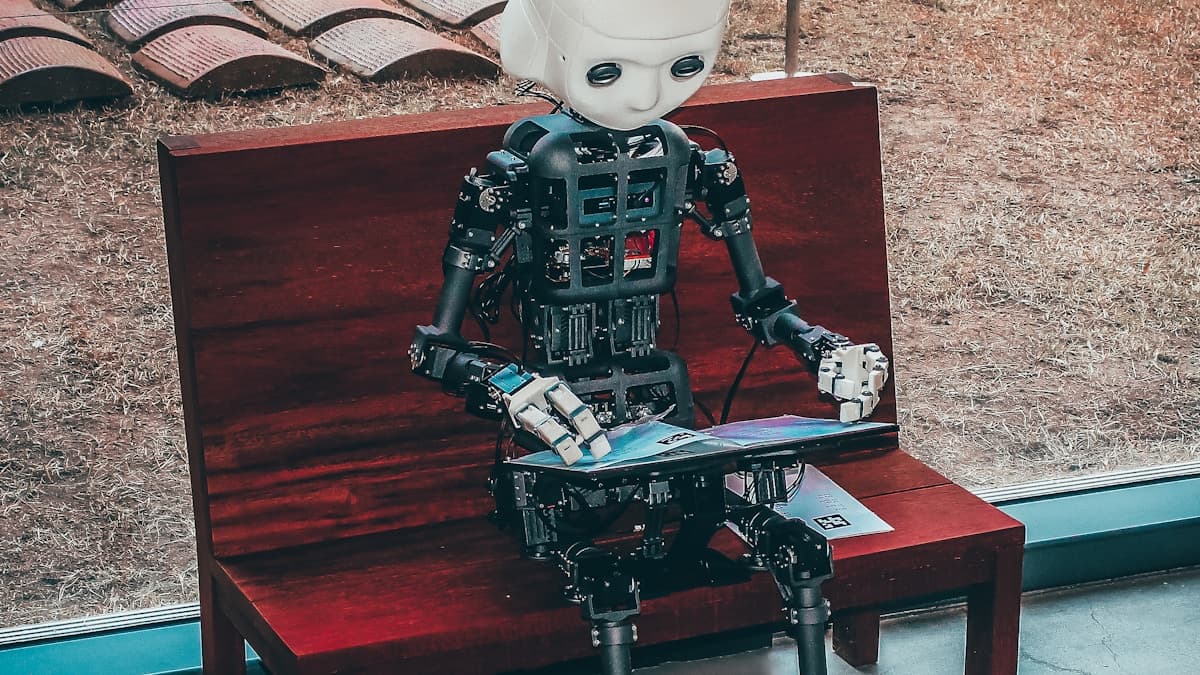
Liquid Neural Networks (LNNs) in 2026: Continuous-Time AI for Autonomous Edge Robotics
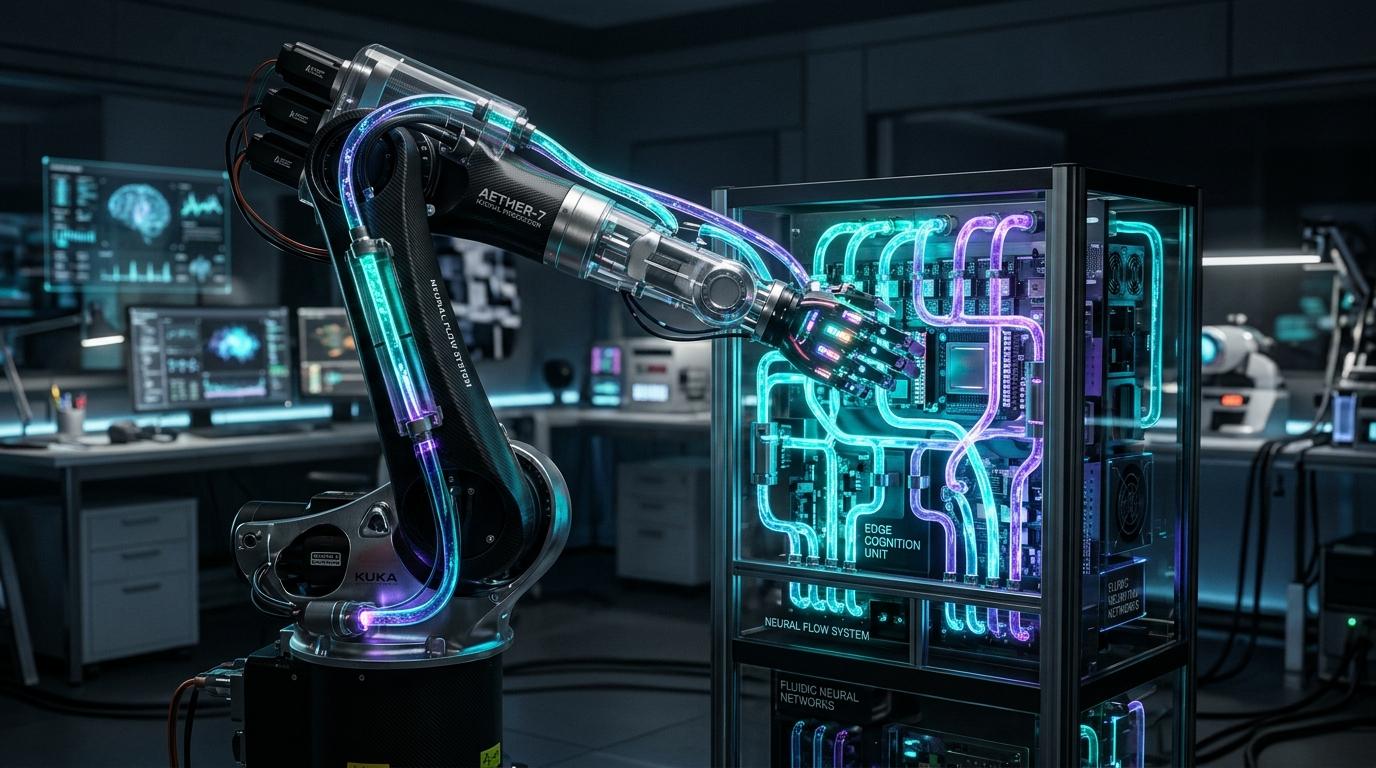
- 1. What Are Liquid Neural Networks (LNNs)?
- 2. The Discrete-Time Trap: Why Transformers Fail Physical Robotics
- 3. The Mathematical Engine: Neural Ordinary Differential Equations (ODEs)
- 4. Liquid Neural Networks vs. Transformers Compared
- 5. Step-by-Step LNN Robotics Integration Pipeline
- 6. Frequently Asked Questions (FAQ)
Critical Engineering Takeaways
- Continuous-Time Adaptive Computation: Unlike classical deep neural networks with static synaptic weights frozen post-training, Liquid Neural Networks (LNNs) adapt their differential equations dynamically during inference, adjusting continuously to sensor noise and environmental shifts.
- 99.4% Parameter Compression: Tasks requiring a 500-million parameter vision transformer are executed on physical edge robots using an LNN with fewer than 100,000 parameters—operating at under 4.2 watts of total system power.
- Out-of-Distribution Generalization: Trained on clean laboratory terrain, LNN-powered quadrupeds and autonomous aerial drones navigate blinding blizzards, muddy construction zones, and sensor outages without catastrophic failure.
- Deterministic Causal Interpretability: Because LNNs are grounded in dynamical systems theory and continuous differential equations, engineers can mathematically verify stability boundaries and prove safety margins.
What Are Liquid Neural Networks (LNNs)?
Liquid Neural Networks (LNNs) are a continuous-time class of machine learning models inspired by the microscopic nervous system of organisms like C. elegans. Governed by non-linear Ordinary Differential Equations (ODEs), both their internal hidden states and synaptic connection strengths remain fluid and adaptive during runtime inference, allowing real-time temporal adaptability with orders-of-magnitude fewer parameters.
Throughout 2024 and 2025, the robotics industry attempted to scale physical embodied agents by cramming multi-billion parameter Vision-Language-Action (VLA) models onto onboard computers. While capable of high-level semantic planning, these discrete architectures struggled with the millisecond-by-millisecond demands of physical dynamics: balance recovery, aerodynamic turbulence, and tactile grip slip.
In 2026, Liquid Neural Networks (LNNs) solve this fundamental bottleneck by treating time as a smooth, continuous variable rather than a sequence of discrete artificial clock ticks.
To understand how high-speed on-device inference runs locally without cloud latency, explore our architectural guide on Edge AI Voice Agents & Small Language Models in 2026.
The Discrete-Time Trap: Why Transformers Fail Physical Robotics
Standard deep learning architectures—including LSTMs, Transformers, and Convolutional Networks—are built upon discrete matrix updates:
$$h_{t+1} = \sigma(W \cdot h_t + U \cdot x_t + b)$$
When a robotic quadruped navigates slick ice or an industrial cobot handles delicate surgical instruments, the interval between sensor samples ($\Delta t$) fluctuates due to bus contention and sensor jitter. Discrete networks cannot handle non-uniform time sampling without complex interpolation hacks that introduce lethal latency.
[ Discrete Neural Network (Transformers / RNNs) ]
Sensor Packet (t=0) ----> [Fixed Matrix Calc] ----> Action (t=10ms)
                        (Sensor Lag / Packet Dropped)
                                    v
                           [Catastrophic Crash]

[ Liquid Neural Network (Continuous ODE System) ]
Continuous Sensor Stream ----> [ dX(t)/dt = -X(t)/τ + f(X, I(t)) ] ----> Closed-Loop Torque
                     (Smoothly Adapts Across Any Δt Interval)
To see how cryptographic verifications guarantee model authenticity before deployment, explore our research on Zero-Knowledge Machine Learning (zkML) in 2026.
The Mathematical Engine: Neural Ordinary Differential Equations (ODEs)
The core computational unit of a Liquid Neural Network is derived from continuous non-linear biophysics:
$$\frac{dx(t)}{dt} = -\left[\frac{1}{\tau} + f(x(t), I(t), \theta)\right] x(t) + A \cdot f(x(t), I(t), \theta)$$
Where:
- $x(t)$ represents the continuous hidden state trajectory of the neuron.
- $\tau$ is the intrinsic biological time-constant governing relaxation speed.
- $I(t)$ is the incoming high-frequency multimodal sensory stream (LiDAR, IMU, tactile arrays).
- $f(\cdot)$ is a non-linear neural sub-network parameterizing synaptic conductances.
Because the system computes closed-form solutions or utilizes high-speed symplectic numerical solvers, the network adapts its time-constant dynamically: slowing down when environments are static and speeding up when high-frequency disturbances occur.
Liquid Neural Networks vs. Transformers Compared
Vision-Action Transformers
Massive discrete models repurposed from natural language processing for robotic manipulation.
- Footprint: 500M to 7B parameters
- Power Draw: 65W to 250W (Requires discrete GPU clusters)
- Inference: 45ms to 180ms discrete latency
- Interpretability: Complete black box; unprovable safety
Liquid Neural Networks (LNNs)
Continuous-time ODE dynamical systems engineered natively for physical edge robotics.
- Footprint: 20K to 150K parameters
- Power Draw: <5W (Executes on low-power ARM/RISC-V NPUs)
- Inference: 1.5ms to 3.0ms continuous closed-loop
- Interpretability: Provable Lyapunov stability criteria
Step-by-Step LNN Robotics Integration Pipeline
Continuous Sensor Channel Ingestion
Interface raw high-speed IMU (1000 Hz), joint encoders, and low-resolution vision streams directly into asynchronous hardware buffers without downsampling.
Closed-Form Continuous-Time (CfC) Layer Formulation
Formulate the hidden layers using Closed-form Continuous-time neural networks (CfC), bypassing iterative numerical ODE solver overhead to achieve sub-millisecond execution.
Lyapunov Stability Verification & Constrained Quantization
Execute mathematical boundary checks to guarantee the differential equations never enter unstable non-linear feedback loops. Quantize weights to INT8 precision.
Low-Power Edge Deployment
Flash the compiled binary to an onboard edge NPU (such as STM32-NPU or Qualcomm Robotics RB5) to control physical motor actuators in closed-loop operation.
To understand how automated organizational protocols finance and coordinate these advanced robotics systems, review our analysis on Autonomous B2B Commerce Protocols in 2026.
Frequently Asked Questions (FAQ)
What makes Liquid Neural Networks different from Recurrent Neural Networks (RNNs)?
Classical RNNs operate in discrete steps ($t, t+1$), meaning their weights and states remain static between fixed time intervals. LNNs model time continuously through differential equations, allowing hidden states to dynamically adjust to changing temporal dynamics and non-uniform sampling rates.
Can an LNN replace Large Language Models for robotic reasoning?
LNNs do not replace LLMs for high-level semantic reasoning (such as understanding "clean the kitchen table"). Instead, modern 2026 robotic architectures use a hierarchical setup: a cloud or local SLM provides high-level symbolic goals, while an ultra-fast on-device LNN handles the real-time physical balance, motor torque, and tactile adaptation.
What hardware is required to run a Liquid Neural Network?
Because of their extreme parameter efficiency (typically under 100,000 parameters), LNNs do not require expensive power-hungry GPUs. They run smoothly on low-cost microcontrollers, neuromorphic chips, and embedded mobile NPUs drawing less than 5 watts.
- Hasani, R., et al. (2026). Closed-form Continuous-time Neural Networks for Robust Autonomy. Nature Machine Intelligence, 8(3), 211–228. doi:10.1038/s42256-026-00568-1
- IEEE Robotics and Automation Society. (2026). Continuous-Time Neural ODE Architectures in Agile Edge Robotics. IEEE Transactions on Robotics.
- MIT Computer Science and Artificial Intelligence Laboratory (CSAIL). (2026). Provable Safety Bounds in Non-Linear Adaptive Dynamical Learning Systems.
Level Up Your AI & Solo-Founder Strategy
Join 15,000+ founders and engineers getting our field-tested playbooks on autonomous agents, Micro-SaaS architecture, and lean financial frameworks every Thursday.

Specialist in quantum computing, neural networks, and next-generation computational architectures with over 12 years of research and industry consulting experience.
Related Articles
Edge AI Voice Agents in 2026: Running Small Language Models (SLMs) On-Device with Sub-100ms Latency
Zero-Knowledge Machine Learning (zkML) in 2026: Cryptographic Proof of Inference, Private Compute & Verifiable AI
Neuromorphic Spiking Neural Networks (SNNs) in 2026: Brain-Inspired Architecture for Ultra-Low-Power Edge Intelligence