Holographic AR Displays in Retail 2027
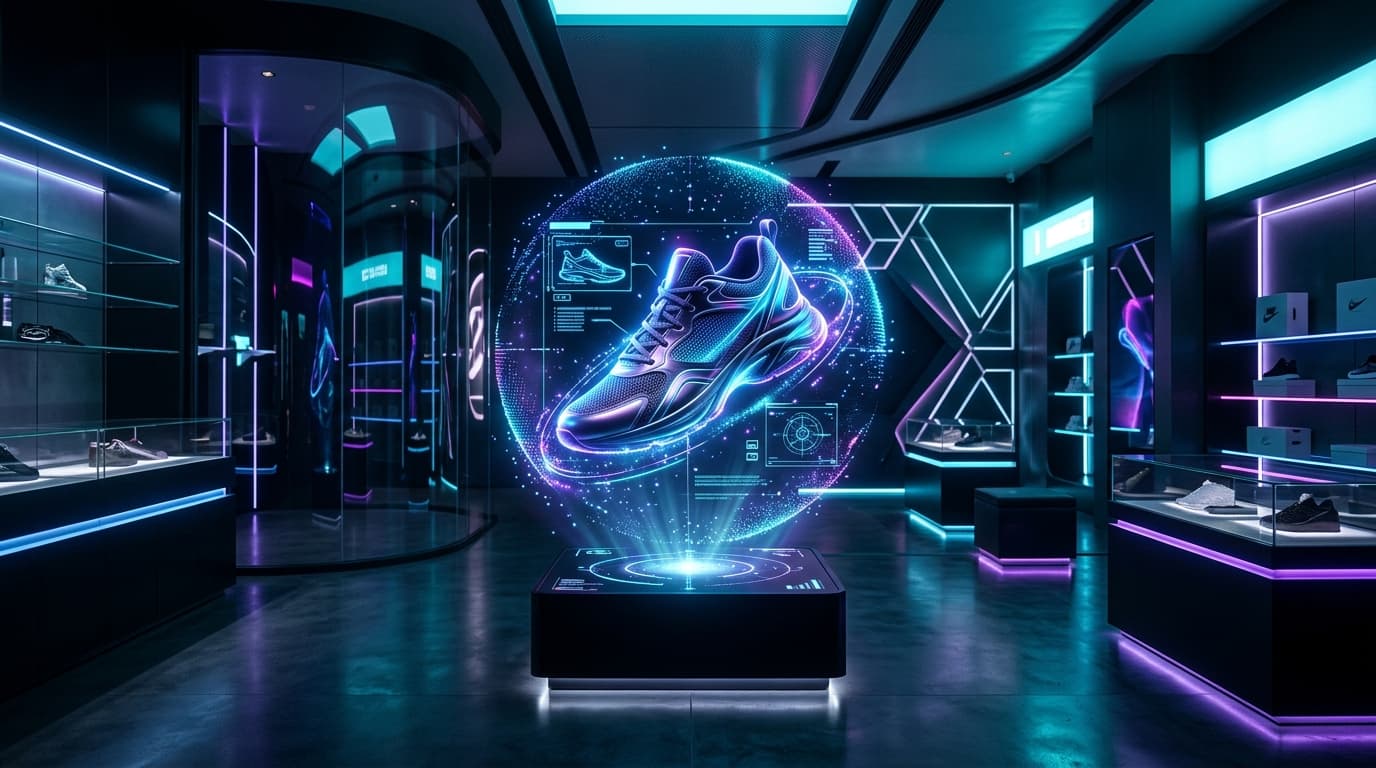
Walking into a premium retail store in 2027 is a profoundly different experience than it was just a few years ago. The physical shelves stacked with massive amounts of cardboard inventory are completely gone. They have been entirely replaced by stunning, high-definition holographic AR displays. This advanced spatial computing technology allows brands to showcase their entire product line without needing massive amounts of physical floor space.
The End of Physical Inventory
Traditional retail stores required massive backrooms to store different sizes and colors of physical products. Modern holographic displays solve this expensive logistical nightmare entirely. A customer can walk into a minimalist boutique and view a single glowing holographic sneaker hovering on a pedestal. Using simple hand gestures, they can instantly change the colors, materials, and digital textures of the hovering shoe in real-time.
Highly Realistic Volumetric Light
These are not the blurry, transparent holograms seen in old science fiction movies. The holographic AR displays in 2027 use advanced volumetric light field technology. The digital items possess accurate physical shadows, detailed reflections, and realistic material depth. When you look at a holographic leather handbag, you can see the precise grain of the digital leather reflecting the ambient store lighting.
Personalized Augmented Shopping
The holographic experience is deeply personalized for every single customer. When a loyal shopper walks into a retail store, the central AI recognizes their encrypted digital profile. The holographic displays instantly shift to show products curated exactly for their specific taste and past purchase history. This creates an incredibly frictionless and highly engaging modern shopping environment that drives massive conversion rates.
Instant Sustainable Fulfillment
Because physical inventory is no longer stored on-site, the fulfillment process has been entirely revolutionized. Once a customer customizes and purchases their holographic product, the order is sent directly to a local automated micro-factory. The physical item is instantly 3D printed or assembled by robotics and delivered to the customer's home by autonomous drone within two hours. This drastically reduces global shipping emissions and material waste.
Frequently Asked Questions
What are holographic AR displays?
They are advanced projectors that use lasers and light fields to create three-dimensional digital objects floating in mid-air. They do not require the user to wear any awkward virtual reality headsets or glasses.
Do these holograms look like real objects?
Yes, the technology has advanced to the point where it is difficult to distinguish a volumetric hologram from a real physical object until you try to touch it.
How do you interact with a holographic display?
The displays are equipped with advanced spatial motion sensors. You can rotate, zoom, and customize the holographic object simply by waving your hands or pinching the air in front of it.
Are all retail stores using this technology in 2027?
Currently, it is heavily utilized by premium luxury brands and high-end electronics stores. However, the technology is rapidly becoming cheaper and expanding into everyday consumer retail.
Does this mean stores have no physical products at all?
Many stores only keep a few core physical "tester" models so customers can feel the actual materials. The vast majority of the color and style variations are displayed purely via holograms.
How are the products actually delivered?
Once you purchase the digital version in-store, a local automated fulfillment center instantly manufactures and ships the exact physical item directly to your residential address.