6G Connectivity: The Post-Smartphone Era Arrives

The smartphone was the defining device of the early twenty-first century. Today, in 2027, holding a glowing rectangle in your hand feels incredibly outdated. The global rollout of 6G connectivity has fundamentally changed how we interact with information. We have officially entered the post-smartphone era. Computing is no longer confined to a screen; it is everywhere, all the time, operating seamlessly in the background.
What Is Ambient Computing?
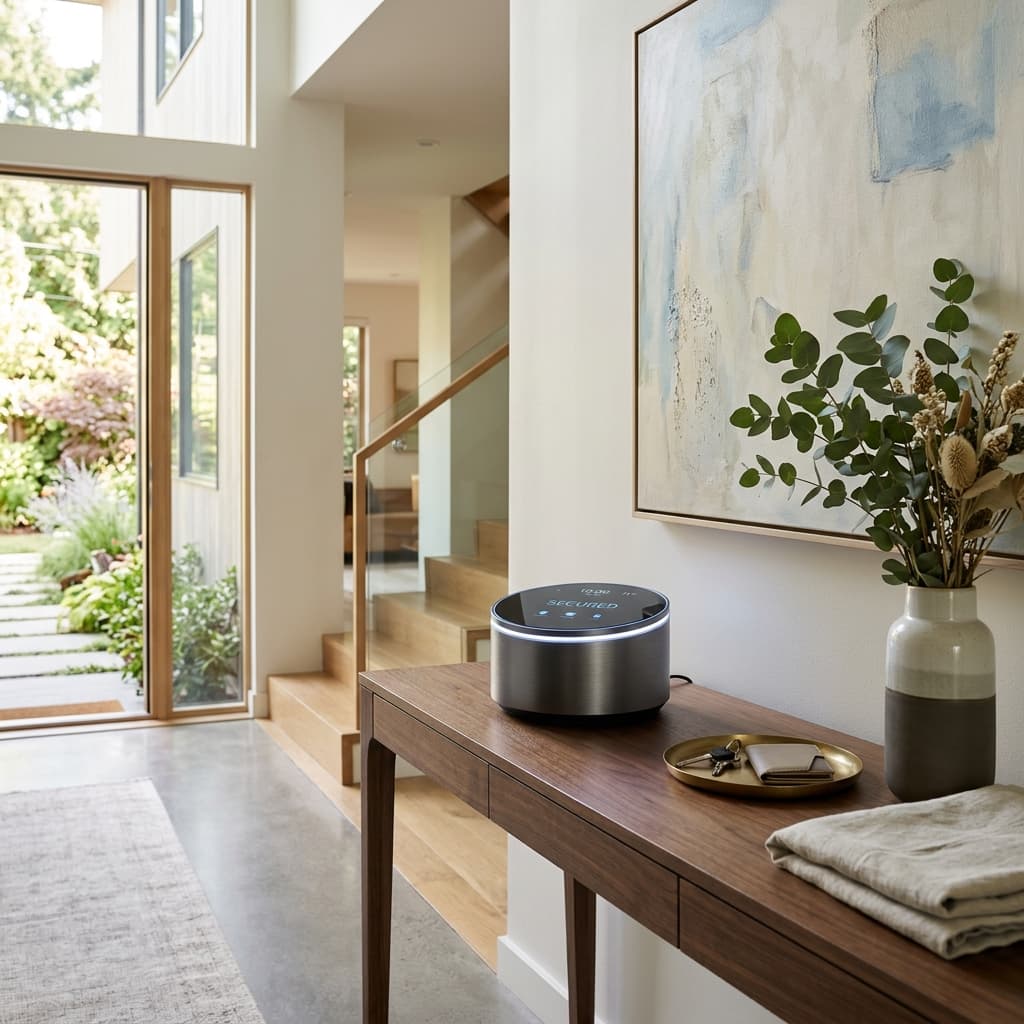
Ambient computing means that technology is integrated seamlessly into your physical environment. With 6G speeds, the processing power does not need to live inside a heavy device in your pocket. The heavy lifting is done in the cloud instantly. You interact with smart glasses, neural interfaces, and haptic clothing. The environment responds to your voice, gestures, and even eye movements in absolute real-time.
Why Did 6G Kill the Smartphone?
5G was fast, but it still suffered from latency issues that made continuous cloud rendering impossible. 6G operates at terahertz frequencies, delivering speeds up to one hundred times faster than 5G. With essentially zero latency, an edge-cloud server can render hyper-realistic 3D graphics and beam them directly into your contact lenses. Carrying a localized processor with a battery simply became unnecessary baggage.
How Does a Day Without a Phone Work?
You wake up, and your smart home projects your schedule onto the bedroom wall. As you walk outside, your lightweight augmented reality glasses overlay navigation instructions on the sidewalk. When you need to take a call, bone-conduction audio built into your collar transmits the sound. You interact with digital objects floating in physical space. Your hands are always completely free.
Which Industries Are Transformed?
The shift to 6G ambient computing has disrupted every major industry. Healthcare utilizes remote robotic surgery with zero delay. Education relies on holographic classrooms where students interact with historical simulations. Retail environments recognize your digital avatar and project personalized virtual changing rooms. Traditional app developers have pivoted entirely to spatial computing experiences.
When Will 6G Reach Rural Areas?
Urban centers adopted 6G infrastructure by late 2026. Global tech consortiums are now deploying low-earth orbit satellite swarms specifically designed for terahertz frequencies. This initiative guarantees that even the most remote rural areas will achieve full ambient computing coverage by the end of 2028. The digital divide is finally closing globally.
Conclusion
The end of the smartphone era is not a loss; it is a massive liberation. 6G connectivity has freed our hands and our posture from digital screens. Ambient computing allows us to remain fully present in the physical world while accessing infinite digital knowledge instantly. Embrace the spatial revolution and prepare for a world where technology becomes completely invisible.
Frequently Asked Questions
Do I still need a cellular data plan?
Yes, but the pricing model has changed completely. Instead of paying for gigabytes of data, consumers pay a flat monthly subscription for continuous ambient cloud access. Universal data streams are now considered a basic utility.
Are smart glasses bad for my eyesight?
No, modern augmented reality glasses are not bad for your eyes. They use advanced optical projection that mimics how the human eye naturally focuses on distant physical objects. It causes significantly less eye strain than staring at a close phone screen.
How do I take photos without a phone?
Your smart glasses or neural wearables contain microscopic cameras. You simply blink twice or use a subtle voice command to capture high-definition spatial video. The media is instantly uploaded and processed in your secure personal cloud.
What happens if the 6G network goes down?
Critical medical and vehicular systems have localized failsafe processors. However, consumer augmented reality devices become mostly useless without a network connection. Network reliability is heavily regulated to prevent large-scale societal disruptions.
Is ambient computing a privacy risk?
Privacy is the largest concern in the 6G era. Because ambient computing requires constant visual and audio monitoring of your environment, strict legislative frameworks are necessary. Hardware now features mandatory physical kill-switches for all sensors.
Can I still buy a traditional smartphone in 2027?
Yes, you can still buy them, but they are considered niche retro devices. They are primarily used by technology minimalists, the elderly, or in highly secure government facilities where wireless cloud rendering is strictly prohibited.