Solid-State Batteries: The Tech Powering 2027's Electric Vehicles
For the last two decades, the electric vehicle (EV) industry has been limited by a single component: the lithium-ion battery. They were heavy, prone to overheating, and suffered from degradation. In 2027, the long-awaited promise of Solid-State Batteries (SSBs) has finally reached commercial scale, completely disrupting the automotive world.
What is a Solid-State Battery?
Unlike traditional lithium-ion batteries that use a liquid or gel electrolyte to transport ions between the anode and cathode, solid-state batteries use a solid electrolyte (often made of ceramics, glass, or solid polymers).
This seemingly simple change unlocks three massive benefits:
- Energy Density: SSBs can store significantly more energy in a smaller space.
- Safety: Because they lack flammable liquid electrolytes, SSBs are incredibly resistant to fires, even if the car is involved in a severe crash.
- Charge Times: Solid electrolytes allow for much faster ion transfer.
Solving Range Anxiety Forever
The most profound impact of SSBs in 2027 is the death of "range anxiety." New flagship models from major automakers boast realistic ranges of over 700 miles (1,120 km) on a single charge.
More importantly, the charging infrastructure has evolved alongside the batteries. With 800-volt and newer 1,000-volt charging architectures, a solid-state EV can charge from 10% to 80% in under 10 minutes—the same time it takes to fill a tank of gas.
The Manufacturing Challenge Overcome
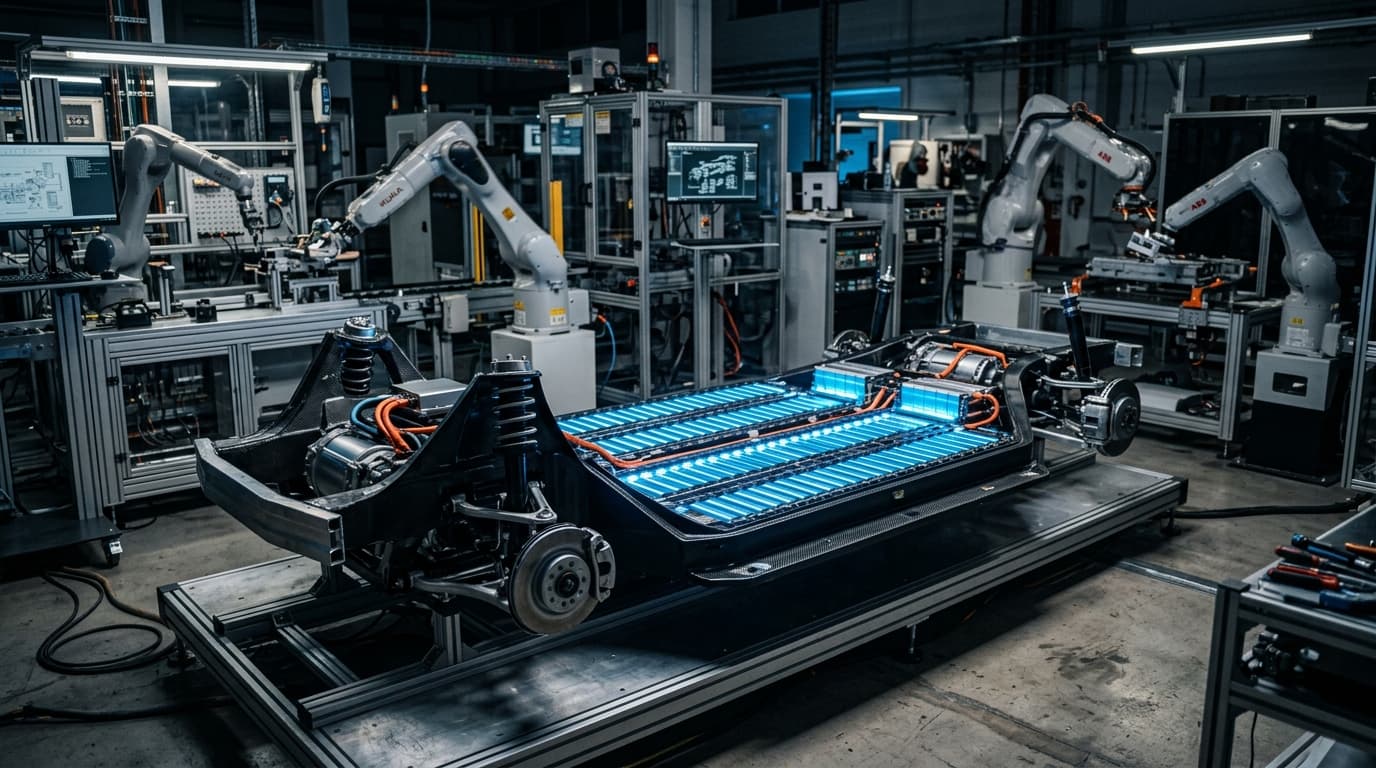
The reason SSBs took so long to arrive was the manufacturing difficulty. Solid electrolytes were brittle and difficult to scale in mass production. However, breakthroughs in roll-to-roll manufacturing and the use of AI in discovering stable crystalline structures have brought the cost per kWh down to parity with traditional lithium-ion by the end of 2026.
"Solid-state isn't just an upgrade; it's the foundation upon which the post-carbon transportation era will be built."
Frequently Asked Questions (FAQ)
Q: Can I put a solid-state battery in my older EV? A: Generally, no. SSBs require completely different thermal management and power delivery architectures. They are being built into entirely new EV platforms.
Q: Are solid-state batteries better for the environment? A: Yes. They last significantly longer (up to 1 million miles with minimal degradation), meaning fewer batteries need to be manufactured and recycled over the lifespan of a vehicle.