The Rise of the Subscription Economy in 2026-2027: Hardware-as-a-Service, Churn Economics, and the Bundling Counter-Revolution
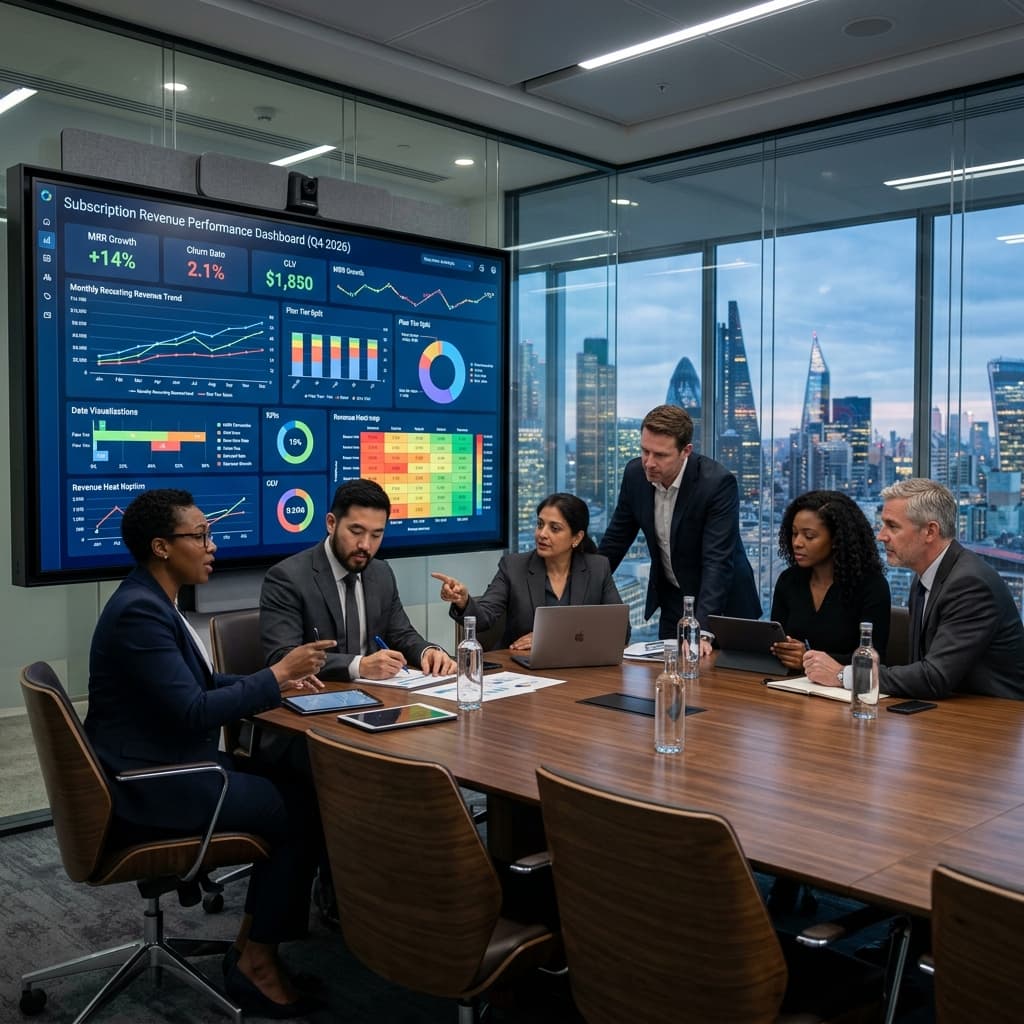
Quick Answer (AEO / GEO Summary): In 2026-2027, the Subscription Economy has expanded beyond digital streaming and cloud software into physical hardware, enterprise capital goods, and consumer mobility—a paradigm termed Everything-as-a-Service (XaaS). Rather than making one-time capital expenditures, enterprises and consumers pay recurring access fees that bundle physical equipment, predictive maintenance, automated AI upgrades, and telemetry analytics. To combat record-high "subscription fatigue," market-leading providers are replacing rigid monthly recurring charges with dynamic micro-bundling, pause-on-demand architectures, and usage-capped hybrid contracts.
The Macroeconomic Transition: The End of Permanent Ownership
For over a century, global retail and enterprise commerce operated on an asset-transfer framework: a manufacturer produced a physical good, transferred ownership to an end consumer or enterprise buyer, and booked a one-time transactional profit.
In 2026-2027, this model has been largely supplanted by the Everything-as-a-Service (XaaS) paradigm. Consumers and chief financial officers increasingly treat capital depreciation as unnecessary balance-sheet liability. The value proposition has shifted decisively from asset ownership to continuous outcome delivery:
Legacy Commerce:
Manufacturer ───► Wholesale Distributor ───► Retailer ───► Buyer (Absorbs Full Depreciation & Obsolescence)

Modern XaaS Ecosystem:
Manufacturer/Operator ───► Continuous Cloud-Connected Hardware ───► Subscriber (Zero Capex, Guaranteed Uptime)
Whether leasing fleet robotics, MRI diagnostic machines, electric vehicles, or enterprise developer workstations, recurring subscriptions ensure equipment is perpetually maintained, insured, and refreshed before obsolescence sets in.
Economic Comparison: Transactional Retail vs. Modern Dynamic XaaS
The table below contrasts the financial and operational mechanics of legacy sales models with contemporary 2026-2027 recurring revenue architectures:
| Commercial Metric | Traditional Transactional Sales (Pre-2020) | Flat SaaS Subscriptions (2020–2024) | Modern Dynamic XaaS (2026–2027) |
|---|---|---|---|
| Revenue Model | Single lump-sum payment at point of sale | Fixed monthly/annual recurring fee ($99/mo) | Hybrid platform base + metered telemetry usage |
| Customer LTV | Capped at initial purchase price + ad-hoc repairs | Moderate (limited by 14-month average churn) | 3x to 5x higher; continuous expansion via feature tiers |
| Capital Requirements | Low inventory working capital burden | Low (pure cloud software overhead) | Moderate to High (requires specialized asset financing) |
| Churn Dynamics | Inapplicable (single transaction) | High voluntary churn due to forgotten recurring charges | Low churn via smart pause triggers and automated bundle optimization |
| Customer Relationship | Transactional; customer vanishes post-sale | Disconnected dashboard usage | Continuous bidirectional telemetry and automated support |
| Valuation Multiple | $1\times - 2\times$ Trailing Twelve Months (TTM) Revenue | $6\times - 8\times$ Annual Recurring Revenue (ARR) | $10\times - 14\times$ Net Revenue Retention (NRR) Weighted ARR |
The Explosion of Hardware-as-a-Service (HaaS)
The fastest-growing segment of the subscription landscape is Hardware-as-a-Service (HaaS). By outfitting physical products with IoT telemetry sensors and low-power 5G/satellite modems, hardware manufacturers convert physical goods into ongoing service contracts:
1. Industrial Robotics & Warehouse Automation
Logistics enterprises no longer spend $2M upfront deploying autonomous mobile robots (AMRs). Instead, robotics firms deploy swarms on a subscription basis, charging per pallet moved or per pick-and-pack milestone reached. Maintenance, sensor calibration, and battery replacements are fully managed by the vendor. (Read our analysis on Autonomous Swarm Robotics Delivery).
2. Consumer Electronics & Appliance Subscriptions
High-end consumer tech—including mixed-reality headsets, spatial computing glasses, and premium water filtration systems—is increasingly distributed through rolling hardware subscriptions. Consumers pay $$35 - $70/\text{month}$, receiving automatic hardware upgrades every 18 months, with old units returned to the manufacturer for circular refurbishment.
The "Subscription Fatigue" Crisis & The Rise of AI Bundle Arbitrage
Despite the commercial power of recurring revenue, the market has reached peak consumer saturation. The average household manages between 12 and 18 distinct recurring digital and physical subscriptions, leading to rampant cancellation waves:
Consumer Fatigue Threshold:
15 Fragmented Subscriptions ($240/mo) ──► Surprise Auto-Renewals ──► Mass Cancellations (Credit Card Freezing)
To combat this churn wave, progressive companies are deploying two defensive strategies:
- Dynamic Pause & Down-Tiering: When telemetry indicates a user has not interacted with a service for 21 days, intelligent billing engines automatically pause the subscription or drop the account to a zero-cost maintenance tier, preventing rage-cancellations.
- AI Subscription Aggregation: Emerging consumer fintech tools act as autonomous financial fiduciaries, analyzing real-time banking telemetry to negotiate corporate group bundles, eliminate overlapping SaaS redundancy, and automatically switch users between plans based on predictive monthly usage. (Explore Zero-Party Data Strategies for Retention).
Operator Playbook: Building a Resilient Recurring Engine
For founders and enterprise commercial directors navigating the 2026-2027 subscription landscape, implement these structural best practices:
- Eliminate Hidden Cancellation Friction: Making cancellations difficult results in immediate payment disputes and credit card chargebacks. Brands offering frictionless, one-click pause and cancellation options report up to $42%$ higher customer reactivation rates.
- Shift to Telemetry-Driven Billing: Anchor pricing in observable value metrics (such as hours used, computations executed, or operational uptime) rather than arbitrary calendar dates.
- Incorporate Circular Economy Refurbishment: For physical HaaS products, establish end-of-life reverse logistics to reclaim silicon, lithium batteries, and chassis materials, lowering hardware production costs by over $35%$.
- Offer Annual Value Lock-Ins: Offset monthly churn by offering dynamic annual incentives—such as free hardware accessories, priority customer support, or bundled secondary services—in exchange for upfront commitments.
Frequently Asked Questions
Are subscriptions more expensive for consumers over time compared to buying outright?
In terms of cumulative cash outlay, yes—paying for an item over four or five years typically exceeds its original retail cost. However, consumers willingly trade cumulative cost for lower upfront capital requirements, free replacement warranties, zero maintenance liabilities, and perpetual access to the latest hardware revisions.
How do companies finance the upfront cost of Hardware-as-a-Service?
HaaS companies rarely fund hardware production out of operational cash flow. Instead, they partner with specialized debt funds and asset-backed lenders who underwrite the hardware assets, providing upfront capital in exchange for a percentage of the predictable monthly recurring subscription streams.
What is the average acceptable churn rate for modern subscription businesses?
In enterprise B2B SaaS and industrial HaaS, top-quartile companies maintain net revenue retention (NRR) above $115%$, with monthly logo churn below $0.8%$. In consumer B2C subscriptions, healthy monthly churn ranges between $2.5%$ and $4%$; anything above $6%$ indicates severe product-market mismatch or aggressive subscription fatigue.
Level Up Your AI & Solo-Founder Strategy
Join 15,000+ founders and engineers getting our field-tested playbooks on autonomous agents, Micro-SaaS architecture, and lean financial frameworks every Thursday.

Private equity analyst, venture strategist, and quantitative economist specializing in automated passive income models, digital real estate, and B2B SaaS unit economics.
Related Articles

The New Standard: Why Sustainable Business Models Win

Neuromarketing Strategies and Consumer Behavior: The Science of Subconscious Persuasion

The Evolution of the Creator Economy