Autonomous Agentic Supply Chains: Algorithmic Sourcing, Dynamic Routing, and Real-Time Freight Settlement in 2026
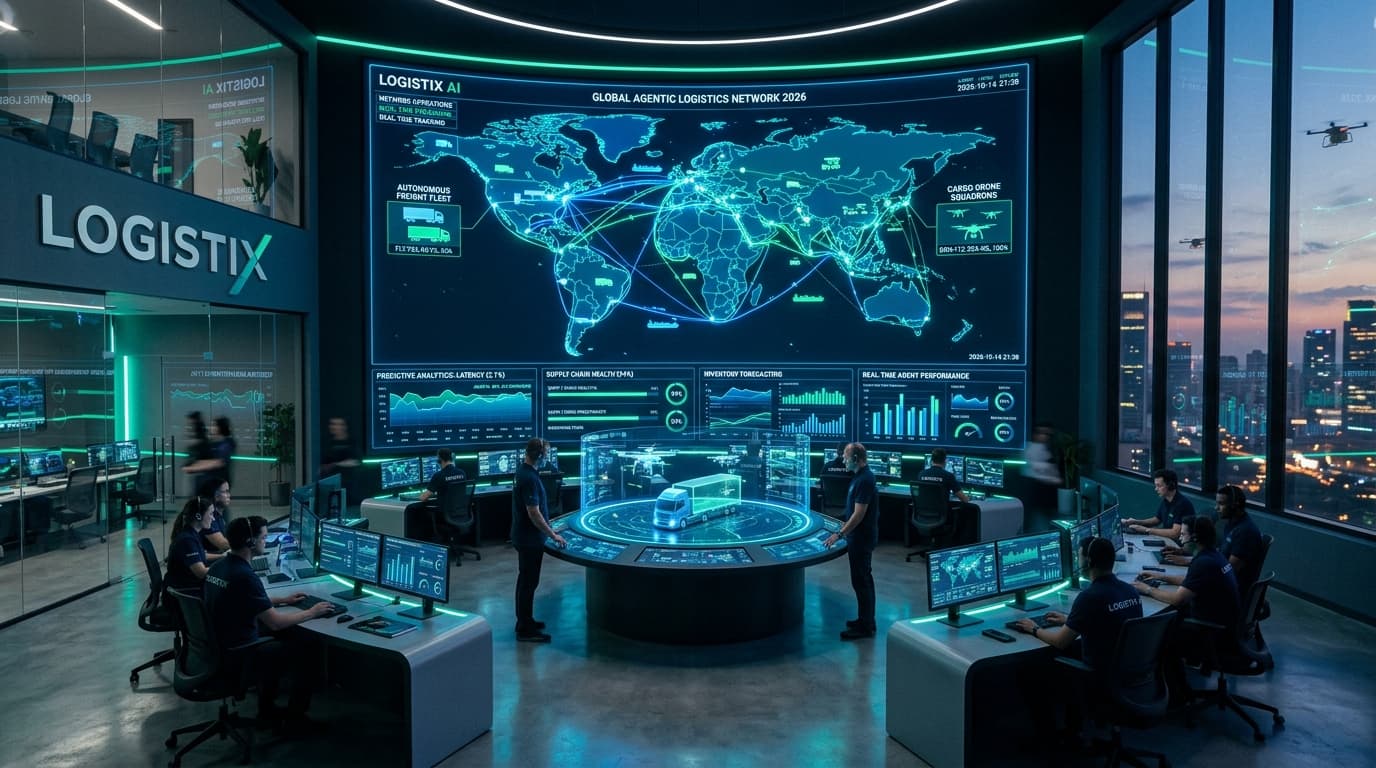
Quick Answer: In 2026–2027, global enterprise supply chains have reached a decisive turning point: transitioning from passive predictive analytics dashboards to Autonomous Agentic Supply Chain Networks. Driven by multi-agent reinforcement learning (MARL), specialized foundation models, and programmable smart contracts, supply chain agents no longer merely alert human operators to disruptions—they autonomously resolve them. When geopolitical conflicts, canal closures, or port strikes threaten shipping lanes, interconnected buyer and carrier agents negotiate alternate multimodal routes, tender competitive spot freight contracts, purchase dynamic cargo insurance, and settle blockchain escrow payments in sub-second intervals without human bottlenecking.
For decades, enterprise supply chain management has been handcuffed by legacy Enterprise Resource Planning (ERP) databases, siloed spreadsheets, and manual email negotiations. Even after the widespread rollout of machine learning forecasting tools, human logistics managers spent 70% of their working hours manually firefighting routine exceptions: rebooking delayed air cargo, tracking misplaced shipping containers, and negotiating spot quotes over the phone.
However, in 2026, the velocity of global trade demands microsecond decision-making. Geopolitical shocks, climate-induced weather anomalies, and volatile energy markets make rigid monthly shipping forecasts obsolete upon publication.
Autonomous agentic supply chains replace static human workflows with decentralized swarms of intelligent software agents possessing defined fiscal budgets, contractual authority, and real-time operational parameters.
Architectural Lifecycle: Traditional ERP Firefighting vs. Self-Healing Agentic Networks
To understand the fundamental operational leap, examine the contrasting operational lifecycles between legacy logistics workflows and autonomous agentic networks:
Legacy Reactive Supply Chain Workflow (High Latency & Human Bottleneck):
[Disruption: Port Congestion / Strike] ──► [Delayed Sensor Alert (24-48 Hours)]
                                                    │
                                                    ▼
[Logistics Manager Reads Alert] ──► [Manual Phone / Email Quotes with 10 Freight Brokers]
                                                    │
                                                    ▼
[Internal Management Approval Bottleneck] ──► [Delayed Rebooking at 200% Spot Premium]

Autonomous Self-Healing Agentic Logistics Network:
[Disruption Detected via Satellite IoT & Geopolitical Feeds]
            │ (Millisecond Event Processing)
            ▼
[Autonomous Sourcing Agent (Identifies Inventory Depletion Risk 45 Days Ahead)]
            │
            ▼
[Multi-Agent Carrier Negotiation (Auctions multimodal rail/sea slots across 50 carriers)]
            │
            ▼
[Automated Smart Contract Tender & Instant Escrow Settlement (Zero Human Lag)]
            │
            ▼
[Autonomous Freight Drone / Electric Truck Dispatch with Continuous Rerouting]
Strategic Comparison Matrix: Human-Managed Logistics vs. Autonomous Agentic Networks
The table below contrasts the core operational metrics of legacy enterprise supply chains against next-generation agentic logistics architectures:
| Supply Chain Dimension | Legacy Human-Managed Supply Chain | Autonomous Agentic Logistics Ecosystem |
|---|---|---|
| Disruption Response Latency | 24 to 72 hours (human email/call loop) | < 60 seconds (Automated algorithmic execution) |
| Inventory Buffer Stock (Safety Stock) | 20% to 35% working capital tied up | 5% to 10% (Just-In-Time precision with predictive agents) |
| Carrier Contracting & Spot Pricing | Manual RFPs and opaque broker markups | Transparent, programmatic micro-auctions across carrier swarms |
| Cross-Border Customs Clearance | Days of manual document filing & paper bills | Automated cryptographic Zero-Knowledge digital declarations |
| Freight Payment & Settlement | 60 to 90-day net payment terms with disputes | Instant smart contract release upon verifiable IoT delivery receipt |
| Decarbonization / ESG Optimization | Rough annual carbon estimates | Real-time modal routing balancing cost, speed, and carbon intensity |
The 4 Pillars Powering Autonomous Logistics in 2026–2027
Enterprises capturing significant margin expansion and resilience advantages rely on four core technological pillars:
1. Multi-Agent Reinforcement Learning (MARL) for Dynamic Routing
Modern logistics networks do not follow rigid fixed shipping paths. Carrier agents, terminal agents, and cargo agents continually interact within a shared multi-agent simulation. If an autonomous containership faces unexpected canal congestion, the cargo agent instantly evaluates the marginal cost of rerouting via rail versus air freight, automatically booking the lowest-cost, lowest-carbon alternative before competitor shipments saturate available regional capacity. (Read our analysis on Autonomous Agentic AI Workflows in Business.)
2. Algorithmic Zero-Party Sourcing and Autonomous RFPs
Instead of relying on human procurement teams to renegotiate raw material supplier contracts every quarter, procurement agents continuously crawl global commodity indexes, factory IoT telemetry, and supplier credit ratings. When an Tier-2 supplier’s financial health triggers risk thresholds, the agent automatically distributes programmatic Requests for Proposal (RFPs), evaluates compliance with ESG mandates, and executes legally binding pilot orders within pre-authorized budget limits. (Explore our guide on Agentic Commerce and Autonomous AI Buyers.)
3. Real-Time Programmable Freight Settlement
One of the most persistent frictions in enterprise trade is carrier payment latency; global shipping dispute rates exceed 15% due to detention, demurrage, and damaged goods. In 2026, freight contracts are executed as self-settling programmable agreements. When physical ambient sensors and satellite trackers verify that temperature-sensitive cargo has arrived safely at the delivery dock, escrow funds are transferred to the carrier’s digital wallet within seconds, eliminating costly factoring fees and cash flow friction.
4. Physical Autonomous Hand-Off: Swarm Drones & Electric Freight Fleets
Software agents coordinate directly with physical automation assets. Warehouse robot swarms palletize cargo tailored to the packing envelope of autonomous electric Class-8 freight trucks. If urban traffic congestion impairs road transit, localized drone delivery swarms autonomously take custody of high-priority parcels for last-mile delivery, completing a seamless chain of custody without a single human touchpoint. (Explore our research on Autonomous Swarm Robotics in Delivery.)
Macro Impact: Slashing Working Capital & Mitigating Geopolitical Risk
For Fortune 500 manufacturers and multinational retailers, agentic supply chains unlock profound economic advantages:
- Unlocking Trapped Working Capital: By replacing speculative bulk buffer inventories with high-confidence agentic just-in-time delivery, corporations reduce working capital overhead by 15% to 25%, freeing billions of dollars for core R&D and strategic capital investments. (Read our analysis on Private Credit and Direct Lending in Corporate Finance.)
- True Geopolitical Resilience: Multilateral trade tensions and tariff changes are modeled continuously. Agents automatically diversify component sourcing across nearshore and multi-regional manufacturing nodes, preventing single-country supply chain paralysis.
- Automated Regulatory Compliance: Under strict global trade transparency laws (such as the EU Corporate Sustainability Due Diligence Directive), autonomous agents generate cryptographic audit trails validating that no raw materials originate from sanctioned regions or unverified labor supply chains.
Frequently Asked Questions (FAQ)
What is the primary difference between traditional supply chain automation and agentic supply chains?
Traditional automation is deterministic: it follows rigid, pre-programmed "if-then" rules that break whenever unexpected disruptions occur (like a sudden dockworkers strike). Agentic supply chains utilize autonomous AI models that possess reasoning capabilities, designated fiscal budgets, and decision-making authority—allowing them to negotiate, adapt, explore alternatives, and execute contracts dynamically without human intervention.
Can an autonomous AI agent sign legally binding logistics and freight contracts?
Yes. Under modern commercial frameworks in 2026, enterprise legal departments grant software agents algorithmic power of attorney within pre-established parameters (such as maximum spending caps, sanctioned carrier whitelists, and verified insurance standards). Digital cryptographic signatures and smart contract protocols validate these transactions under international commercial law.
Will autonomous supply chains eliminate the role of human logistics managers?
Rather than eliminating human operators, agentic supply chains elevate their responsibilities. Human logistics directors transition from reactive day-to-day firefighting (such as tracking lost containers or booking spot trucks) to strategic systems design, vendor relationship oversight, risk parameter definition, and supervising agentic negotiation boundaries.
How do autonomous supply chains protect against adversarial cyber attacks or vendor fraud?
Leading enterprise architectures employ continuous zero-trust verification, decentralized physical infrastructure (DePIN) consensus, and multi-agent cross-verification. Before any contract is executed, multiple independent auditor agents verify the cryptographic identity of the carrier, cross-reference satellite transponder feeds with stated GPS locations, and inspect tamper-proof IoT cryptographic receipts.