Personal AI Hardware: The Rise of Contextual Wearables and Ambient Computing
For nearly two decades, the smartphone has been the undisputed command center of human digital life. We reach into our pockets dozens of times each hour, staring down at a glowing rectangle of glass to send messages, verify directions, check calendars, and interact with the internet.
Yet this interaction model comes with an enormous cognitive tax. Every time you pull out your phone to check a quick piece of information, your attention is hijacked by a barrage of colorful notification badges, social media feeds, and algorithmic distractions.
A fundamental computing paradigm shift is now underway: the transition from screen-dependent devices to ambient, contextual AI wearables.
Instead of forcing users to navigate complex visual application menus, next-generation AI hardware operates quietly in the background of daily life. Through lightweight smart glasses, intelligent open-ear audio, and compact neural companion devices, computing is shifting from an active, visual disruption to an ambient perceptual layer that assists you only when needed.
This guide provides an engineering-grade yet accessible breakdown of personal AI hardware, examining how on-device neural processing, multimodal sensors, and privacy architecture are reshaping everyday life.
The Four Form Factors of Ambient AI Hardware
Rather than relying on a single monolithic device, the emerging personal hardware ecosystem is dividing into specialized, lightweight form factors:
┌────────────────────────────────────────────────────────┐
│             The Personal AI Hardware Ecosystem         │
└───────────────────────────┬────────────────────────────┘
         ┌──────────────────┼──────────────────┐
         ▼                  ▼                  ▼
┌─────────────────┐┌─────────────────┐┌─────────────────┐
│ 1. Smart Audio  ││ 2. Contextual   ││ 3. Ambient AI   │
│    Eyewear      ││    Earbuds & Pins││    Home Hubs   │
└─────────────────┘└─────────────────┘└─────────────────┘
                            │
                            ▼
                   ┌─────────────────┐
                   │ 4. Neural Rings │
                   │    & Biosensors │
                   └─────────────────┘
1. Smart Audio Eyewear
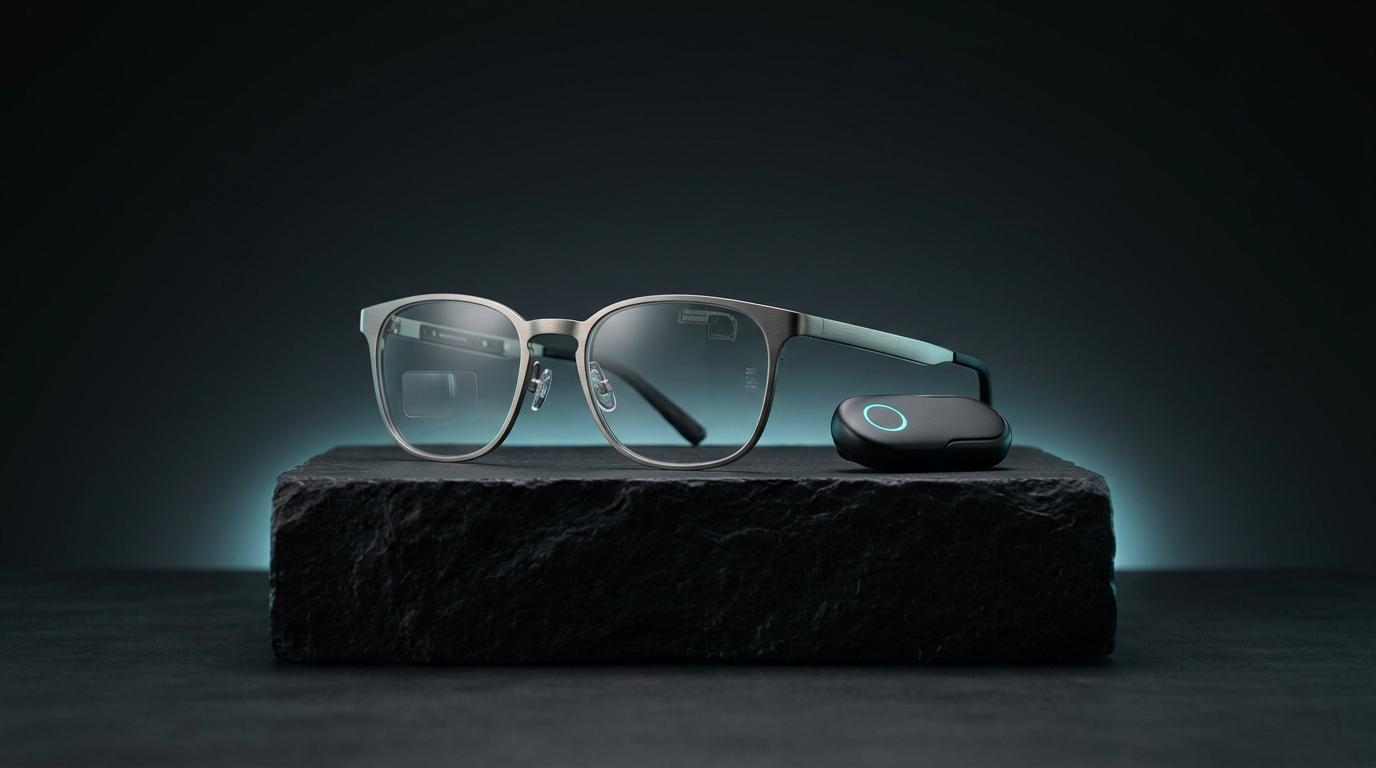
Smart glasses have evolved far beyond the bulky, socially awkward headsets of early prototype eras. Modern intelligent eyewear looks indistinguishable from standard designer frames. Equipped with directional open-ear micro-speakers, dual ultra-wide cameras, and low-power ambient light sensors, smart glasses give your AI assistant visual and auditory context:
- "Translate this menu sign into English."
- "What kind of plant is this leaf in front of me?"
- "Summarize the document lying on my desk."
Because the camera shares your exact point of view, the model interprets the world as you see it, delivering concise whispered answers directly to your ears without requiring you to look away from your conversation.
2. Contextual Earbuds and Open-Ear Audio
Earbuds are transforming from passive music streaming tools into intelligent acoustic filters. Advanced neural audio chips isolate background street noise while simultaneously running real-time speech translation across dozens of languages. When someone speaks to you in Tokyo or Madrid, translation audio streams seamlessly into your ears with less than two hundred milliseconds of latency.
3. Ambient Lapel Pins and Optical Companions
Small magnetic pins worn on clothing act as ambient recorders and meeting summarizers. By capturing natural voice memos and transcribing multi-person conversations in real time, these devices automatically extract action items, project deadlines, and key decisions, directly syncing them to internal team dashboards.
4. Smart Rings and Continuous Biosensors
Screenless rings worn on the finger capture continuous heart rate variability (HRV), skin temperature, and sleep cycles. Without annoying screens or vibrations, they provide non-invasive physiological context that tells downstream AI models whether you are deep in focused work, experiencing acute stress, or ready for restorative sleep.
Comparing Paradigms: Smartphones vs Ambient Wearables
| Dimension | The Traditional Smartphone | Contextual AI Wearables |
|---|---|---|
| User Attention | High Friction (Pull out, unlock, browse screens) | Zero Friction (Ambient, voice, or whispered cue) |
| Visual Immersion | Demands 100% of your visual focus | Hands-free and eyes-up; preserves real-world connection |
| Environmental Context | Blind (Knows GPS, but cannot see what you see) | Multimodal (Shares your line of sight and acoustic scene) |
| Data Processing | Cloud-heavy application pipelines | Hybrid (On-device neural inference + encrypted cloud) |
| Cognitive Fatigue | High (Dozens of notification rabbit holes) | Minimal (Filtered, intentional information delivery) |
As we explored in our analysis of AI productivity tools and intelligent workflow automation, reducing input friction and eliminating repetitive screen navigation is the ultimate lever for preserving mental focus.
The Engineering Breakthroughs Making Wearables Possible
Why is personal AI hardware becoming viable now, after years of failed prototypes? Three specific technological inflection points have converged:
[ Silicon Miniaturization ] ──► Sub-1-Watt NPU Inference on Glasses
[ Battery Chemistry ]       ──► All-Day Runtime on Micro-Batteries
[ Local SLMs ]              ──► Millisecond Speech & Visual Processing
1. Ultra-Low-Power Neural Processing Units (NPUs)
Previous generation wearable chips were energy-hungry general processors that drained batteries within two hours. Today’s dedicated NPUs operate under one watt of electrical draw while executing trillions of mathematical operations per second, enabling full-day battery life in standard glasses frames.
2. On-Device Small Language Models (SLMs)
Sending every voice command to remote cloud servers creates unacceptable network lag and burns cellular bandwidth. By running quantized small language models locally on your wearable or paired pocket hub, everyday commands execute instantly without internet connectivity.
3. Directional Acoustic Beamforming
Miniature speaker arrays built into the temples of smart glasses direct acoustic sound waves straight into the user's ear canals with phase-cancellation technology. People standing right next to you hear virtually nothing, maintaining private audio in crowded public spaces.
These consumer hardware breakthroughs closely mirror the distributed intelligence principles examined in our study on smart home automation and everyday intelligent living.
The Privacy and Ethics Frontier: Camera Etiquette and Data Sovereignty
Widespread cameras and microphones on personal accessories naturally raise understandable privacy concerns:
[!IMPORTANT] Data Sovereignty Rule: Wearable devices must utilize strict hardware-level privacy protections. Audio recordings and camera feeds should never be stored permanently or utilized for commercial model training without explicit, verifiable user consent.
- Hardware LED Indicators: Any wearable device equipped with an active camera must feature a hardwired physical LED light that cannot be bypassed by software, clearly alerting bystanders whenever video is recording.
- On-Device Data Ephemerality: Visual frames used to answer contextual queries (e.g., "How much is this item?") should be processed in volatile memory and purged immediately after the user receives the answer.
- Granular No-Record Zones: Modern wearable operating systems allow users to automatically geofence private spaces—such as bathrooms, locker rooms, or confidential corporate boardrooms—where camera and microphone functions disable themselves automatically.
Adopting healthy digital boundaries with wearable devices aligns directly with clinical protocols for managing screen exposure and neurochemical balance.
The Future of Everyday Ambient Intelligence
The smartphone will not vanish overnight, but its role will gradually shift from an all-consuming digital distraction to a quiet computational hub tucked away in a pocket or bag.
By distributing sensory input across intelligent glasses, acoustic earbuds, and wearable biosensors, personal AI hardware liberates our eyes and hands, returning our attention to the physical world and the people around us.
Technology is at its best not when it demands our undivided gaze, but when it fades gracefully into the background of a richer, more intentional human life.
Level Up Your AI & Solo-Founder Strategy
Join 15,000+ founders and engineers getting our field-tested playbooks on autonomous agents, Micro-SaaS architecture, and lean financial frameworks every Thursday.

Specialist in quantum computing, neural networks, and next-generation computational architectures with over 12 years of research and industry consulting experience.