Digital Nomad 2.0: Best Visas, Tax Frameworks, and Global Hubs
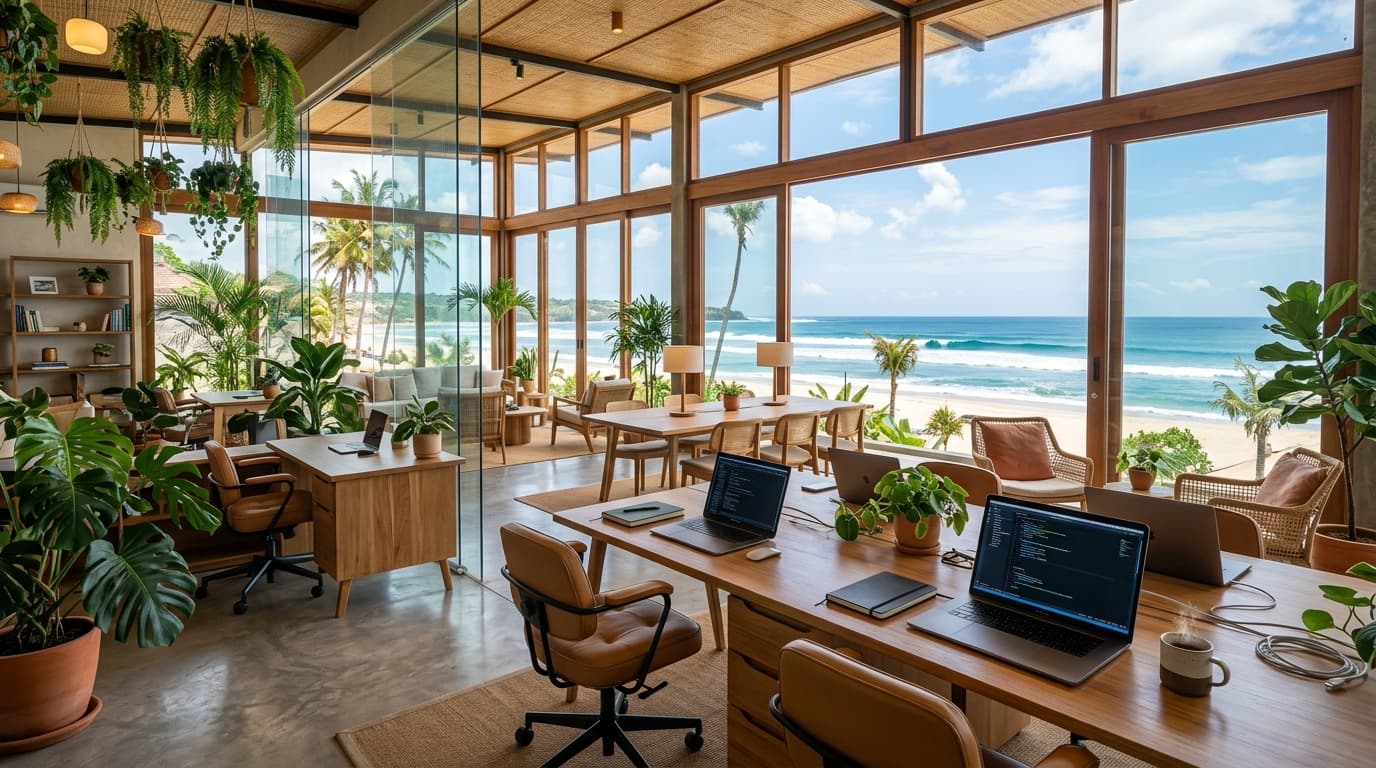
Quick Answer: The Digital Nomad 2.0 movement represents the professional maturation of remote work from informal backpacking into an established global mobility framework supported by over 80 national governments. Elite remote knowledge workers, sovereign software engineers, and executive consultants leverage legal digital nomad visas (DNVs) to legally live abroad, access state-of-the-art fiber infrastructure, and optimize their effective tax rates from 45%+ down to 0% to 15% through strategic international tax frameworks, foreign earned income exclusions, and territorial tax residency programs.
A decade ago, the lifestyle of a "digital nomad" was broadly characterized by youthful backpackers surviving on meager freelance income while working off unstable hostel Wi-Fi in Southeast Asia, chronically evading local immigration authorities on rolling 30-day tourist visas.
Today, that ad-hoc dynamic has been completely replaced by Digital Nomad 2.0. Modern nomadic professionals are high-earning software developers, AI founders, enterprise executives, and corporate consultants earning $120,000 to $400,000+ annually. Rather than hiding from tax authorities and border guards, these professionals are courted by national governments offering streamlined, multi-year Digital Nomad Visas (DNVs), zero-tax corporate structures, luxury co-living compounds, and fiber-optic gigabit connectivity.
By mastering the mechanics of geo-arbitrage—earning in strong global currencies (USD, EUR, GBP) while living in jurisdictions with low living costs, superior climates, and attractive tax regimes—remote workers are building extraordinary personal wealth and lifestyle freedom.
Strategic Comparison: The World's Top 6 Digital Nomad Visas
Navigating the global landscape of remote work visas requires evaluating statutory income minimums, tax liabilities, administrative processing speeds, and long-term residency options. The following comparative matrix outlines the top sovereign programs available today:
| Destination / Program | Monthly Income Requirement (USD) | Initial Visa Duration | Tax on Foreign-Sourced Income | Cost of Living Index (vs. NYC = 100) | Average Internet Speed | Pathway to Permanent Residency? |
|---|---|---|---|---|---|---|
| Dubai / UAE (Virtual Work Visa) | $3,500 / month | 1 Year (Renewable indefinitely) | 0% Personal Income Tax | 62.4 | 280 Mbps (Fiber + 5G) | No (Convertible to 10-Yr Golden Visa) |
| Portugal (D8 Digital Nomad Visa) | 1 to 2 Years (Renewable up to 5) | Progressive or Non-Habitual Tax Status | 44.8 | 190 Mbps | Yes (Eligible for EU Citizenship after 5 yrs) | |
| Spain (Digital Nomad Visa / Ley de Startups) | 1 Year (Extendable to 3 Years) | 24% Flat Rate (Beckham Law Regime) | 48.2 | 215 Mbps | Yes (Eligible for Spanish residency) | |
| Bali / Indonesia (Remote Worker E33G) | $60,000 annual savings / contract | 1 Year (Multi-entry) | 0% (If earnings originate outside ID) | 26.5 | 85 Mbps (Starlink + Coworking Fiber) | No (Strictly temporary stay permit) |
| Medellín / Colombia (Visa V Nómadas Digitales) | ~$1,500 / month | Up to 2 Years | Exempt from local tax under 183 days/yr | 24.1 | 110 Mbps | No (Time does not count toward residency) |
| Japan (Digital Nomad Visa) | ¥10,000,000 / yr (~$66,000) | 6 Months (Non-renewable in-country) | Exempt under bilateral tax treaties | 41.5 | 320 Mbps | No (Requires 6-month cooling off period) |
Detailed Deep-Dive: Premier Global Nomad Ecosystems
Selecting your remote base requires balancing tax efficiency with lifestyle, climate, safety, and community vitality:
1. Dubai & Abu Dhabi, UAE: The Sovereign Low-Tax Metropolis
For high-income tech founders, crypto operators, and executive consultants, the United Arab Emirates represents the apex of modern remote infrastructure:
- Tax Architecture: 0% personal income tax, 0% capital gains tax, and zero inheritance tax.
- Physical Safety & Infrastructure: Ranked among the safest jurisdictions globally, featuring world-class healthcare, direct flights to 85% of the globe within 8 hours, and instantaneous 5G network coverage.
- The Ideal Nomad Profile: Earners generating $15,000+ monthly who prioritize zero administrative bureaucracy, luxury networking, and winter sunshine.
2. Lisbon and the Autonomous Region of Madeira, Portugal: The European Gateway
Portugal remains the premier destination for remote workers seeking European culture and a reliable legal pathway to a European Union passport:
- Madeira Digital Nomad Village (Ponta do Sol): The world’s first dedicated government-supported nomad hub, offering free municipal coworking spaces, daily networking masterminds, and fiber connections anchored by subsea Atlantic cables.
- Residency Benefits: Time spent legally on Portugal’s D8 residency visa counts toward the mandatory 5-year timeline required to apply for permanent residency and EU citizenship.
3. Medellín, Colombia: The Capital of Geo-Arbitrage
Nestled in the Aburrá Valley, Medellín has transformed into South America's most dynamic remote work capital:
- Unbeatable Value Proposition: Operating on the US Eastern Time Zone (EST/COT), Medellín allows North American remote workers to maintain standard corporate hours while renting luxury penthouse apartments in neighborhoods like El Poblado and Laureles for under $1,200/month.
- Climate & Lifestyle: Known as the "City of Eternal Spring," ambient temperatures hover between 22°C and 28°C (72°F–82°F) year-round.
Legal, Tax, and Financial Architecture for Digital Nomad 2.0
Failing to plan your legal and fiscal affairs turns the nomad dream into an administrative nightmare. Sophisticated remote workers engineer their global posture around four operational pillars:
The Digital Nomad Legal Architecture:
[Primary Operating Entity (e.g., US LLC or UAE Free Zone)]
                      │
                      ▼
[Territorial Bank Accounts (e.g., Wise, Mercury, HSBC Expat)]
                      │
                      ▼
[Global Medical & Evacuation Insurance (e.g., SafetyWing, Cigna Global)]
                      │
                      ▼
[Strict Calendar Tracking: Staying Under 183-Day Physical Tax Residency Traps]
- The 183-Day Rule: In the vast majority of countries, remaining physically present for 183 days within a 12-month calendar year automatically classifies you as a domestic tax resident, subjecting your worldwide income to local taxation. Manage travel schedules meticulously using automated passport-tracking software.
- Foreign Earned Income Exclusion (FEIE for US Citizens): American citizens are taxed based on citizenship rather than physical residency. However, by qualifying under the Physical Presence Test (spending 330 full days outside the US in a 365-day period), US nomads can exclude up to ~$126,500 of foreign earned income from federal taxation.
- Dedicated Global International Health Insurance: Never rely on basic travel insurance for full-time nomadic living. Secure comprehensive worldwide private medical insurance that covers chronic care, routine diagnostics, hospitalizations, and emergency medical air evacuation back to your home country.
Frequently Asked Questions (FAQ)
Can I legally work on a standard tourist visa in foreign countries?
Historically, remote workers operated in legal grey zones on tourist visas. However, working on a tourist visa is technically illegal in most jurisdictions and can result in deportation, fines, and re-entry bans if immigration authorities discover you are working domestically. Applying for official Digital Nomad Visas guarantees 100% legal compliance, right-to-work protections, and frictionless border crossings.
How do remote nomads handle international banking and multi-currency payments?
Elite nomads utilize a multi-tier banking architecture: maintaining an onshore anchor bank account in their home country, paired with international cross-border fintech services (such as Wise Business, Revolut, or Airwallex) that allow frictionless multi-currency spending at real mid-market exchange rates without predatory foreign transaction fees.
What are the biggest psychological challenges of long-term nomadic life?
The primary hazard is nomadic loneliness and burnout. Constantly moving cities every four weeks shatters routine, disrupts gym training, and prevents the formation of deep, long-term friendships. The modern "Slowmad" trend solves this by establishing 3-to-6-month residencies in established nomad hubs, allowing remote professionals to build community, establish productivity rhythms, and truly immerse themselves in local cultures.
Can families with children pursue a digital nomad lifestyle?
Yes. The emergence of "Worldschooling" communities and flexible international micro-schools in hubs like Bali, Lisbon, and Chiang Mai has made nomadic living accessible to remote families. Many co-living developments now offer dedicated children's educational spaces, certified child care, and family-oriented visa sponsorships.
Level Up Your AI & Solo-Founder Strategy
Join 15,000+ founders and engineers getting our field-tested playbooks on autonomous agents, Micro-SaaS architecture, and lean financial frameworks every Thursday.

Clinical researcher and physician specializing in continuous metabolic biosensors, circadian medicine, neuroplasticity biohacking, and evidence-based longevity.
Related Articles

Everyday Biohacking: The Ultimate Protocol to Optimize Sleep Architecture and Deep Focus

Sustainable Habits for Everyday Life: High-Impact Eco-Friendly Guide

The Longevity Protocol: How Everyday People Are Extending Their Healthspan