Quantum Sensors and Precision Metrology: Beyond Classical Measurement Limits
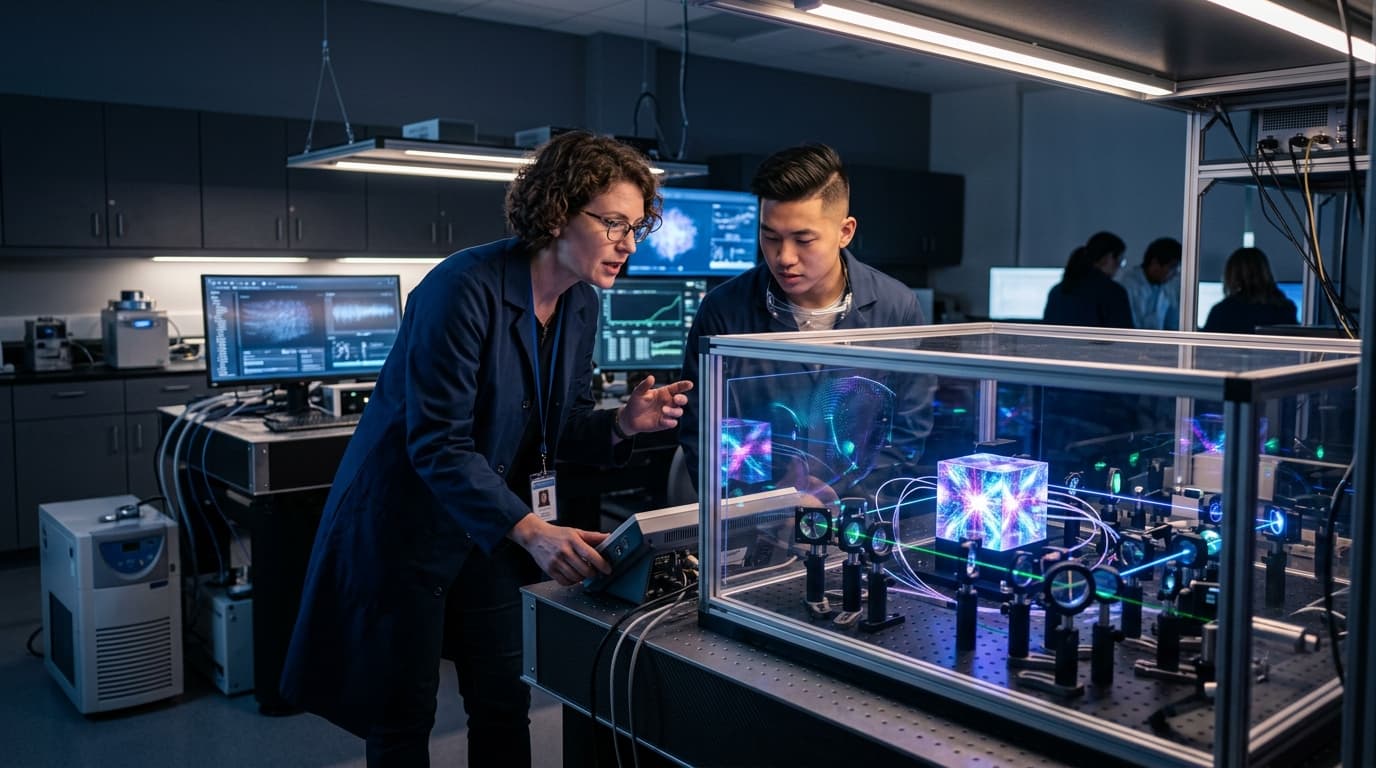
While quantum computing dominates headlines, quantum sensing is quietly delivering the most immediate, commercially transformative breakthroughs of the quantum era. By harnessing the fundamental sensitivity of quantum states—such as electron spin, superposition, and quantum entanglement—quantum sensors detect infinitesimal fluctuations in gravity, magnetic fields, time, and temperature with precision thousands of times greater than classical instruments.
What Are Quantum Sensors? (Core Definition and Mechanism)
A quantum sensor is a metrological device that uses quantum mechanical systems—such as single atoms, trapped ions, or crystal lattice vacancies—as the primary measuring probe. Because individual quantum states are exceptionally sensitive to external physical perturbations, any shift in ambient gravity, electrical potential, or magnetic flux immediately alters the quantum phase or spin state, providing near-absolute measurement accuracy.
Key Takeaways for Precision Metrology
- Extreme Sensitivity: Capable of measuring magnetic variations at the femtotesla ($10^{-15}$ T) scale and gravitational anomalies at the microgal level.
- Drift-Free Measurement: Classical sensors degrade and require periodic calibration; quantum properties are anchored in universal physical constants, providing perpetual calibration stability.
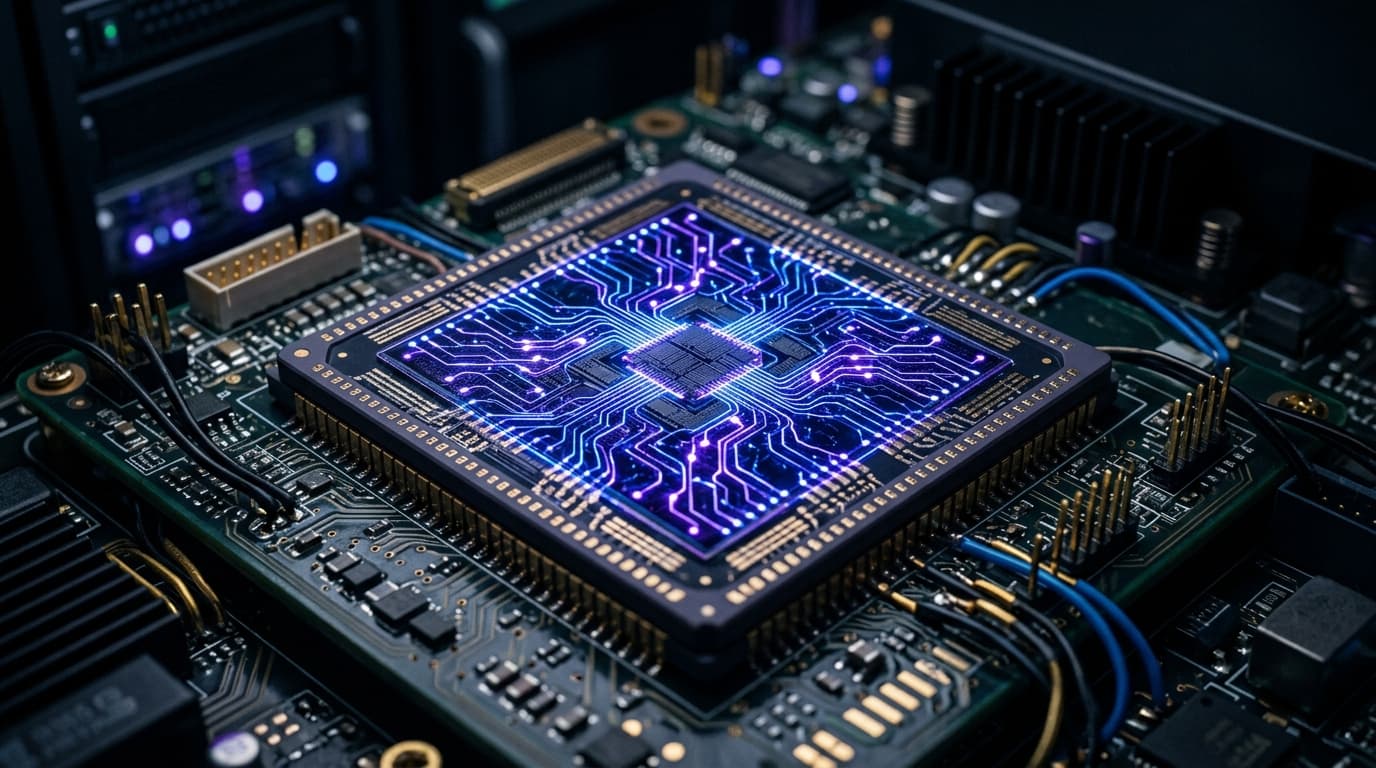
- Compact Form Factors: Micro-fabricated atomic vapor cells and diamond nitrogen-vacancy (NV) chips are transitioning from massive laboratory cryostats into rugged, handheld field devices.
The Three Pillar Technologies Powering Quantum Sensing
1. Nitrogen-Vacancy (NV) Centers in Diamond
Nitrogen-vacancy centers are atomic-scale defects engineered into synthetic diamond lattices where two adjacent carbon atoms are replaced by a nitrogen atom and a lattice vacancy. When illuminated by green laser light, the NV center fluoresces, emitting red light whose intensity correlates directly with ambient magnetic and microwave fields. NV-diamond sensors operate reliably at room temperature, enabling non-invasive mapping of electrical impulses across individual human neurons and nanoscale semiconductor chip diagnostics.
2. Cold-Atom Gravimetry and Subterranean Mapping
By cooling rubidium or cesium atoms to fractions of a microkelvin using laser cooling and magneto-optical traps, quantum gravimeters measure how cold atom clouds fall under gravity via atomic wave interferometry. These ultra-sensitive quantum gravimeters can detect underground aquifers, hollow tunnel networks, mineral deposits, and shifting magma reservoirs beneath volcanoes without drilling a single test hole.
3. Quantum-Assisted Inertial Navigation (GPS-Free Positioning)
Modern autonomous systems and defense platforms face severe vulnerabilities from satellite GPS spoofing, jamming, and underground signal loss. Quantum inertial measurement units (Q-IMUs)—combining atom-interferometer accelerometers and nuclear magnetic resonance gyroscopes—enable completely self-contained, tamper-proof dead reckoning. Submarines, autonomous aerial vehicles, and deep-sea exploration vessels can navigate across continents for weeks while drifting by less than a few meters without satellite connectivity.
Real-World Applications Across Global Industries
- Biomedical Diagnostics: Magnetoencephalography (MEG) powered by optically pumped magnetometers (OPMs) records brain activity with high spatial resolution without requiring bulky liquid-helium cooling jackets.
- Geophysical Resource Discovery: Mineral exploration teams deploy airborne quantum gravimeters to pinpoint lithium, rare earth, and copper deposits concealed hundreds of meters below dense geological strata.
- Semiconductor Quality Control: NV-center magnetic imaging inspects buried interconnects in advanced 3D packaging and multi-die chiplets, locating microscopic current leakage points before mass production.
Frequently Asked Questions
How do quantum sensors differ from classical electronic sensors?
Classical sensors rely on macro-scale physical interactions that drift over time and generate electrical thermal noise. Quantum sensors measure phase changes in individual atoms or quantum spins, which are inherently tied to immutable laws of physics and do not suffer from mechanical wear or calibration drift.
Can quantum sensors operate at room temperature?
Yes. While early laboratory systems required cryogenic cooling, modern diamond nitrogen-vacancy (NV) sensors and optically pumped atomic vapor cells operate at room temperature and ambient atmospheric conditions, allowing widespread commercial adoption.
How do quantum sensors solve GPS vulnerabilities?
Quantum inertial navigation units calculate position and velocity by measuring atomic wave interference in cold atom clouds. Because this calculation occurs entirely inside the sealed device without receiving external satellite signals, it is impervious to jamming, spoofing, or subterranean signal blocking.