Urban Farming & Hyper-Local Diets: The 2026 Food Revolution
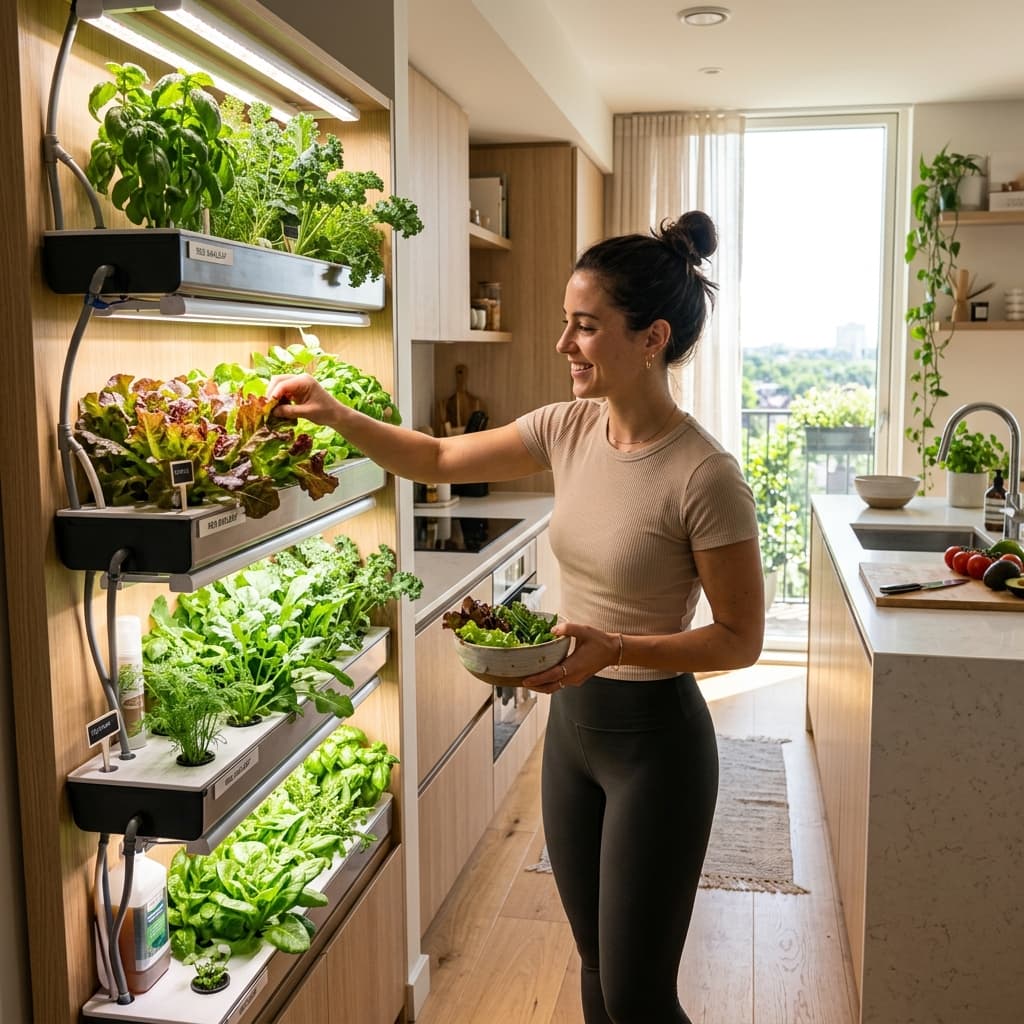
The global food supply chain has faced immense pressure over the last few decades. In response, a massive cultural shift has occurred in 2026: the rise of the Hyper-Local Diet. Food isn't just sourced locally anymore; it's sourced directly from the consumer's living room.
The Smart Kitchen Garden
Urban farming is no longer limited to rooftop community gardens. The defining appliance of 2026 is the Smart Hydroponic Wall. These sleek, AI-driven vertical gardens fit seamlessly into modern apartments. Users simply insert "seed pods," fill a water reservoir, and let the AI take over. The system automatically adjusts LED spectrums, water pH, and nutrient delivery to grow crisp lettuce, fresh herbs, and plump cherry tomatoes at 3x the speed of traditional soil farming.
Nutritional Superiority
Beyond the environmental benefits of zero food miles, the hyper-local diet is driven by nutrition. Vegetables lose a significant percentage of their vitamins within 24 hours of harvesting. By eating produce literally seconds after picking it from their kitchen wall, urban farmers are consuming food at its absolute peak nutritional value.
Building Resilient Communities
Neighborhoods are also forming hyper-local food networks. An app connects local urban farmers, allowing a resident who grew too many strawberries to trade with a neighbor who has a surplus of basil. It is creating a sense of community resilience and reducing urban food waste to near zero.
Growing your own food is no longer a rural chore—it is a cornerstone of the modern, health-conscious urban lifestyle.