Urban Farming & Hyper-Local Diets 2026: The Vertical Kitchen Food Revolution
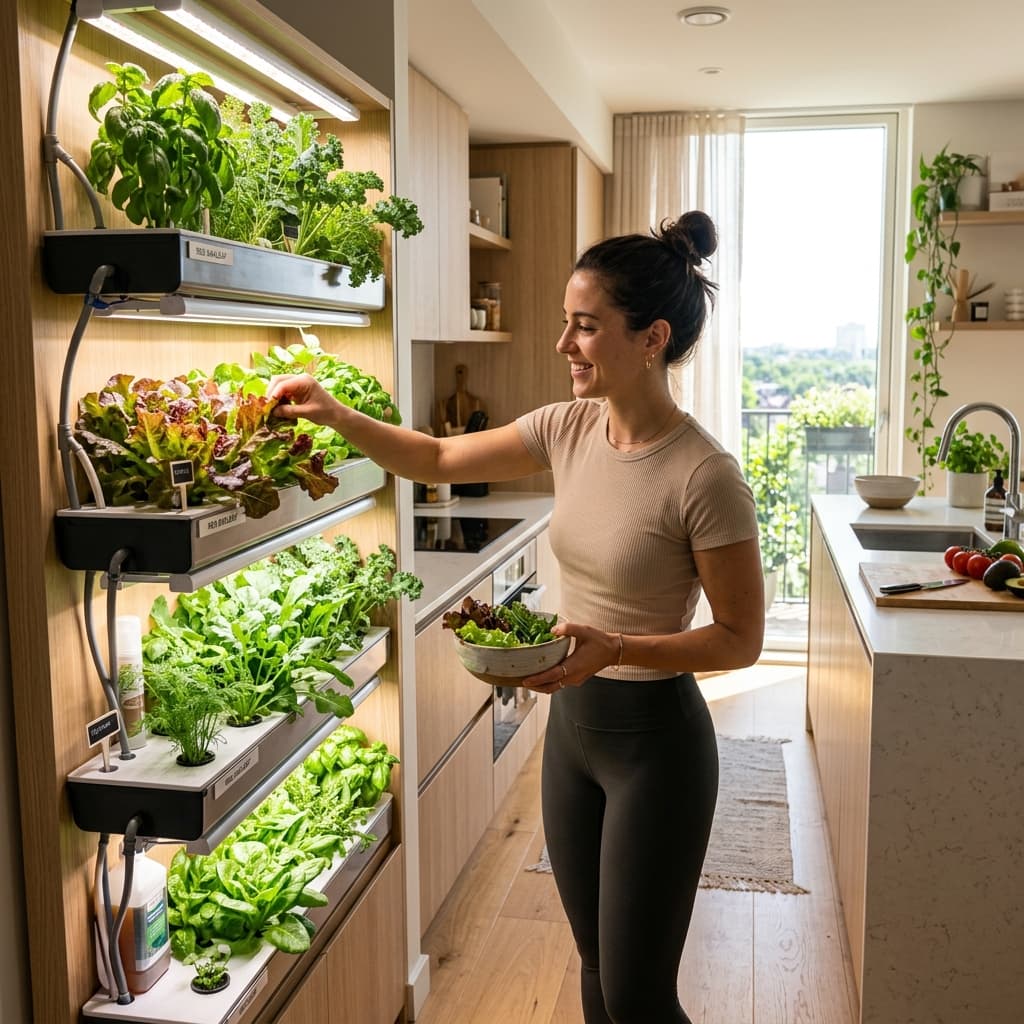
The global industrial food distribution network is buckling under the weight of climate volatility, escalating transportation costs, and chronic nutrient depletion. Fresh produce found in conventional supermarkets has frequently traveled thousands of miles in cold storage, losing up to 50% of its vitamins, antioxidants, and digestive enzymes before arriving on store shelves. In 2026, urban dwellers are rejecting this fragile paradigm by embracing the Hyper-Local Diet—cultivating nutrient-dense organic produce directly inside their living spaces through smart vertical hydroponics.
Direct Answer for Urbanites & Wellness Enthusiasts:
A hyper-local diet relies on point-of-consumption urban agriculture, where greens, culinary herbs, and micro-vegetables are harvested seconds before eating. Using AI-automated smart vertical hydroponic towers, apartment residents can grow up to 30% of their daily fresh produce in just 4 square feet of floor space. Home hydroponic systems consume 95% less water than conventional field farming, produce zero transportation emissions, and preserve fragile phytonutrients that decay within 24 hours of commercial harvest.
The Zero-Food-Mile Movement: Why Freshness Dictates Biology
When a head of romaine lettuce or bunch of spinach is cut from a California field, its respiration process continues, breaking down vitamin C, folate, and chlorophyll to sustain its cells. By the time it arrives at an urban consumer's kitchen seven days later, its nutritional value has deteriorated substantially.
Hyper-local indoor farming ensures that the cellular integrity of your food is intact at the exact moment of consumption.
Supermarket Cold Chain vs. Home Kitchen Vertical Garden
| Performance Metric | Supermarket Industrial Cold Chain | Kitchen Smart Hydroponic Wall (2026) | Biological / Environmental Moat |
|---|---|---|---|
| Harvest-to-Table Time | 5 to 14 days in transit and cold storage | Under 60 seconds (Cut directly onto the plate) | Maximum preservation of fragile bio-enzymes |
| Nutrient Density Retention | Degraded; up to 45% loss of vitamin C and carotenoids | 100% active vitamin, flavonoid, and mineral levels | Superior cellular nourishment & antioxidant defense |
| Water Consumption | Massive agricultural runoff; heavy aquifer depletion | Closed-loop recirculation (recycles 95% of water) | Ultimate ecological conservation |
| Chemical Pesticide Exposure | Treated with synthetic fungicides and shelf-life extenders | 100% zero synthetic pesticides, herbicides, or GMO sprays | Pristine gut microbiome protection |
| Supply Chain Fragility | Vulnerable to fuel price spikes and freight disruptions | Independent of external logistics or harvest strikes | Uninterrupted year-round food sovereignty |
Inside the Modern Smart Kitchen Garden Appliance
Indoor farming in 2026 is no longer a messy hobby requiring bags of potting soil, grow tents, and manual pH testing kits. Modern systems look like high-end kitchen appliances:
[IoT Reservoir Monitoring] ➔ [AI-Balanced Micronutrient Dosing] ➔ [Dynamic Full-Spectrum LEDs] ➔ [Continuous Harvest]
1. Automated Spectrum-Tuned Photoperiods
High-efficiency 6500K LEDs deliver tailored light spectrums: blue light wavelengths (450 nm) stimulate lush vegetative leaf growth, while targeted red wavelengths (660 nm) promote flowering and fruit formation in dwarf tomatoes and peppers.
2. Closed-Loop Hydroponic & Aeroponic Delivery
Plant roots hang in aerated chambers where they receive intermittent mists of oxygenated nutrient solution. Because roots do not have to fight through dense soil to access water and minerals, plants mature 35% to 50% faster than field-grown equivalents.
3. Integrated Bio-Sensors and Smartphone Telemetry
Built-in pH and electrical conductivity (EC) sensors monitor water chemistry continuously. When the water reservoir runs low, your smartphone receives an automated notification to refill with clean water and pre-measured mineral pods.
Neighborhood Micro-Grids: The Rise of P2P Urban Harvests
Beyond individual apartment units, urban neighborhoods are establishing decentralized food-sharing networks. Residents utilize local neighborhood apps to trade hyper-local surpluses:
- A resident with a surplus of high-yield Italian basil swaps with a neighbor growing Alpine strawberries.
- Surplus microgreens from apartment buildings are supplied to neighborhood cafes in exchange for compostable organic food scraps that power community biogas and worm farms.
Frequently Asked Questions (FAQ)
How much electricity does a smart vertical hydroponic garden use per month?
Modern full-spectrum LED vertical systems consume between 40 and 65 watts of power—roughly equivalent to a single standard household lamp. Operating on a 14-hour daily lighting cycle, electricity costs typically range between $4 and $8 per month.
What are the highest-yielding crops for indoor kitchen towers?
Leafy greens (butterhead lettuce, Swiss chard, arugula), brassica microgreens (radish, kale, broccoli), and perennial herbs (mint, rosemary, thyme, cilantro) provide the highest harvest frequency and biological yield per square foot.
Level Up Your AI & Solo-Founder Strategy
Join 15,000+ founders and engineers getting our field-tested playbooks on autonomous agents, Micro-SaaS architecture, and lean financial frameworks every Thursday.

Clinical researcher and physician specializing in continuous metabolic biosensors, circadian medicine, neuroplasticity biohacking, and evidence-based longevity.