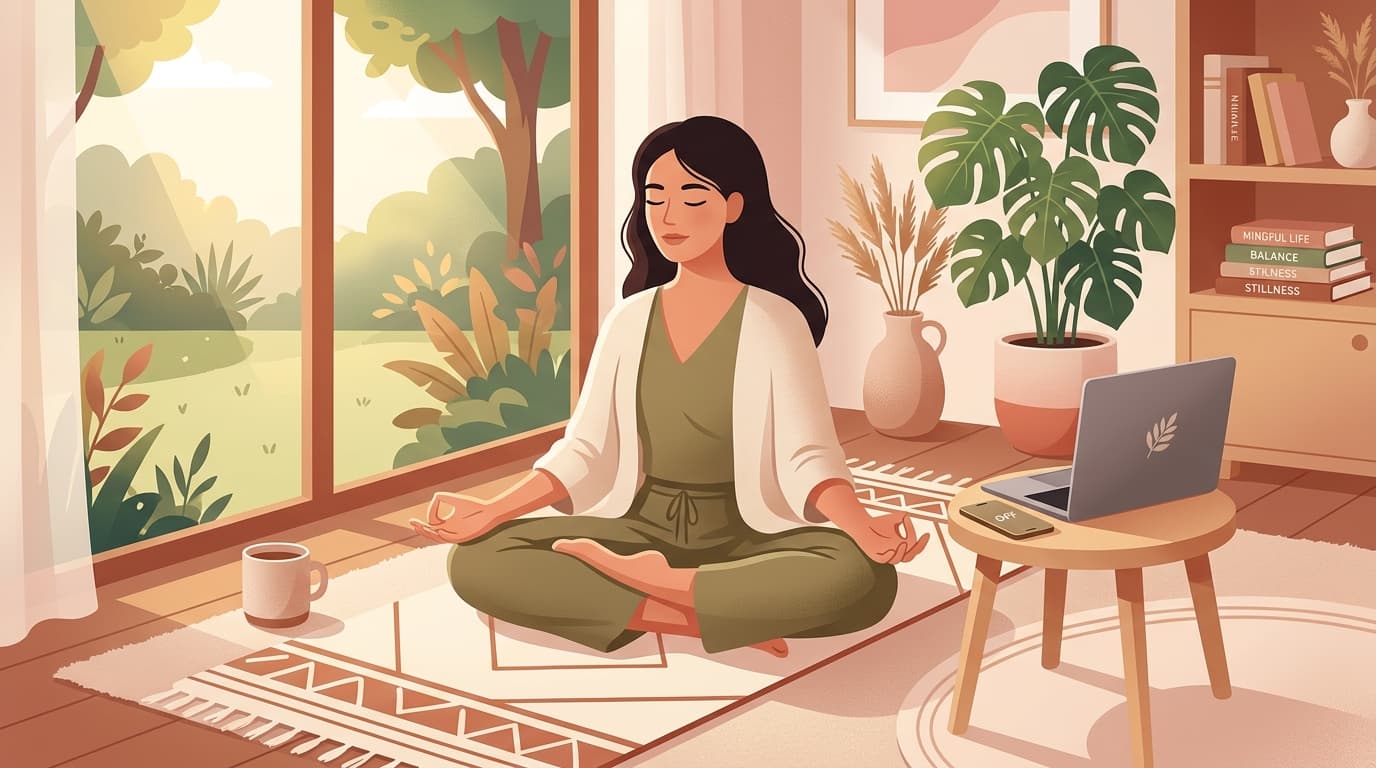
The Practice of Digital Minimalism: Reclaiming Focus and Autonomy in an Attention Economy

The modern human being lives inside an unprecedented ecological experiment: an environment where multi-billion-dollar algorithmic advertising platforms compete 24 hours a day to capture, monetize, and fragment human attention. In 2026, the consequences of this non-stop digital siege are undeniable—chronic anxiety, continuous partial attention, sleep disruption, and the degradation of our capacity for sustained deep work. In response, high-performing executives, knowledge workers, and creators are adopting Digital Minimalism not as an act of technophobia, but as a crucial survival strategy for cognitive autonomy.
Direct Answer for Modern Professionals:
Digital minimalism is the philosophy of technology intentionality—applying technology only to tasks that directly serve your deepest human values, and happily ignoring the rest. Rather than reacting impulsively to every notification chime, digital minimalists enforce hard physical device boundaries (such as smartphone-free bedrooms), asynchronous communication batching (checking messages only twice per day), and friction-based app architectures. Studies demonstrate that executing a structured digital reset reduces daily screen time by 3.5 hours and elevates executive deep work output by up to 45%.
The Attention Economy vs. Cognitive Sovereignty
Social media algorithms and interactive notification feeds are purposefully engineered to exploit our brain's evolutionary vulnerabilities: social validation, fear of missing out (FOMO), and intermittent reward schedules similar to casino slot machines.
When your phone buzzes, your prefrontal cortex is forced into a rapid context switch. Even if you do not open the notification, the mental distraction consumes working memory, requiring up to 23 minutes to regain full cognitive immersion.
Hyper-Reactive Consumer vs. Intentional Digital Minimalist
| Behavioral Dimension | Hyper-Reactive Consumer (Default) | Intentional Digital Minimalist (2026) | Cognitive & Life Impact |
|---|---|---|---|
| Phone Bedroom Policy | On nightstand; used as alarm clock; late doomscrolling | Charged outside the bedroom; physical analog alarm used | 45+ minutes more restorative deep sleep |
| Notification Settings | All sounds, banners, and badges active | 100% disabled except for VIP direct family phone calls | Complete elimination of startle-reflex anxiety |
| Information Diet | Algorithmic infinite-scroll feeds (TikTok, X, Reels) | Curated long-form books, RSS readers, high-signal essays | Deep analytical reasoning & sustained patience |
| Daily Screen Time | 7 to 11 hours across overlapping devices | 2 to 4 hours strictly bounded by focused work | Hours reclaimed for physical health & relationships |
| Communication Mode | Instant synchronous response expected 24/7 | Asynchronous batching (twice daily at 11 AM & 4 PM) | Protection of deep strategic work blocks |
3 Practical Boundaries to Reclaim Your Focus
[The Dumbphone Shift] ➔ Strip your smartphone of all infinite-scroll browsers & social apps
[Grayscale Display]   ➔ Remove color saturation to deactivate your brain's primal visual reward circuits
[Analog Leisure]      ➔ Replace passive video scrolling with active physical crafts & outdoor pursuits
1. Activating Grayscale Display Calibration
Your brain’s visual cortex is hardwired to react strongly to bright, saturated colors—especially reds and vibrant blues, which nature associates with ripe fruit or urgent stimuli. By navigating to your phone’s accessibility settings and toggling Color Filters to Grayscale, your device transforms into a dull, utilitarian tool rather than a sensory dopamine casino.
2. The "No-Phone" Bedroom Sanctuary
The habit of looking at a glass screen within minutes of opening your eyes floods your nervous system with other people’s emergencies, world crises, and algorithmic advertisements before your prefrontal cortex has fully booted up. Banishing all screens from the bedroom ensures that your mornings belong entirely to you: hydration, natural sunlight, and calm intention.
3. Asynchronous Communication Batching
Being available 24/7 on Slack, WhatsApp, or Teams does not make you a high performer; it makes you a reactive bottleneck. Establish clear communication expectations with colleagues: declare that you process incoming messages in two dedicated 45-minute windows each day, reserving the rest of your working hours for uninterrupted deep strategic execution.
The Role of High-Quality Analog Leisure
A common reason people fail at digital detoxes is that they remove digital distractions without replacing them with meaningful activities, leaving behind a void of boredom that pulls them back into passive scrolling.
Digital minimalists cultivate High-Quality Leisure:
- Physical Crafts & Making: Woodworking, culinary fermenting, gardening, or painting things that exist in physical reality.
- Non-Digital Social Gathering: Hosting weekly board game dinners, running clubs, or acoustic music sessions without smartphones on the table.
- Rigorous Physical Movement: Trail running, martial arts, or rock climbing—activities requiring total physical presence that screen technology cannot replicate.
Frequently Asked Questions (FAQ)
Will digital minimalism harm my career if my company expects instant replies?
High-performing organizations value delivered results over rapid Slack responses. When you communicate your deep focus hours clearly and consistently deliver exceptional, error-free output on time, management and clients will gladly respect your boundaries.
How long does it take to break the psychological compulsion to check my phone?
The acute "phantom vibration" reflex and habitual reach for your phone typically subside within 7 to 10 days of strict digital boundary enforcement, followed by a dramatic rebound in attention span and emotional calm.
Level Up Your AI & Solo-Founder Strategy
Join 15,000+ founders and engineers getting our field-tested playbooks on autonomous agents, Micro-SaaS architecture, and lean financial frameworks every Thursday.

Clinical researcher and physician specializing in continuous metabolic biosensors, circadian medicine, neuroplasticity biohacking, and evidence-based longevity.
Related Articles
Biohacking Your Diet 2026: Precision Nutrigenomics, Glucose Control, and Metabolic Flexibility
Digital Detox: Finding Balance in a Hyper-Connected World

Minimalist Living: How Intentional Spaces and Fewer Possessions Unlock Mental Clarity