Cell-Free DNA (cfDNA) Liquid Biopsies and Circadian Methylation Rhythms in 2026: The Rise of Home Cancer Interception Protocols
1. The Historical Failure of Anatomical Oncology: The 1-Billion-Cell Blindspot
For the past seventy years, the fundamental paradigm of cancer screening has been visual and morphological. Physicians ordered mammograms, low-dose chest CTs, ultrasounds, and endoscopies, looking for physical masses embedded within tissue.
While these tools reduced mortality compared to no screening, they suffered from a fatal mathematical and biological limitation:
- A solid tumor must reach approximately 1 centimeter in diameter before it can be reliably resolved by high-resolution clinical imaging (CT, MRI, PET).
- By the time a solid tumor reaches 1 centimeter, it contains between 100 million and 1 billion neoplastic cells.
- At the 1-billion-cell threshold, the tumor has likely undergone tens of thousands of cell divisions, accumulated immense genetic heterogeneity, and initiated early micro-metastatic intravasation into lymphatic and peripheral vasculature.
Treating cancer at the 1-billion-cell mark forces medicine into aggressive, systemic interventions: surgical resections, high-dose chemotherapy, and ionizing radiation that exact severe collateral damage on healthy organs.
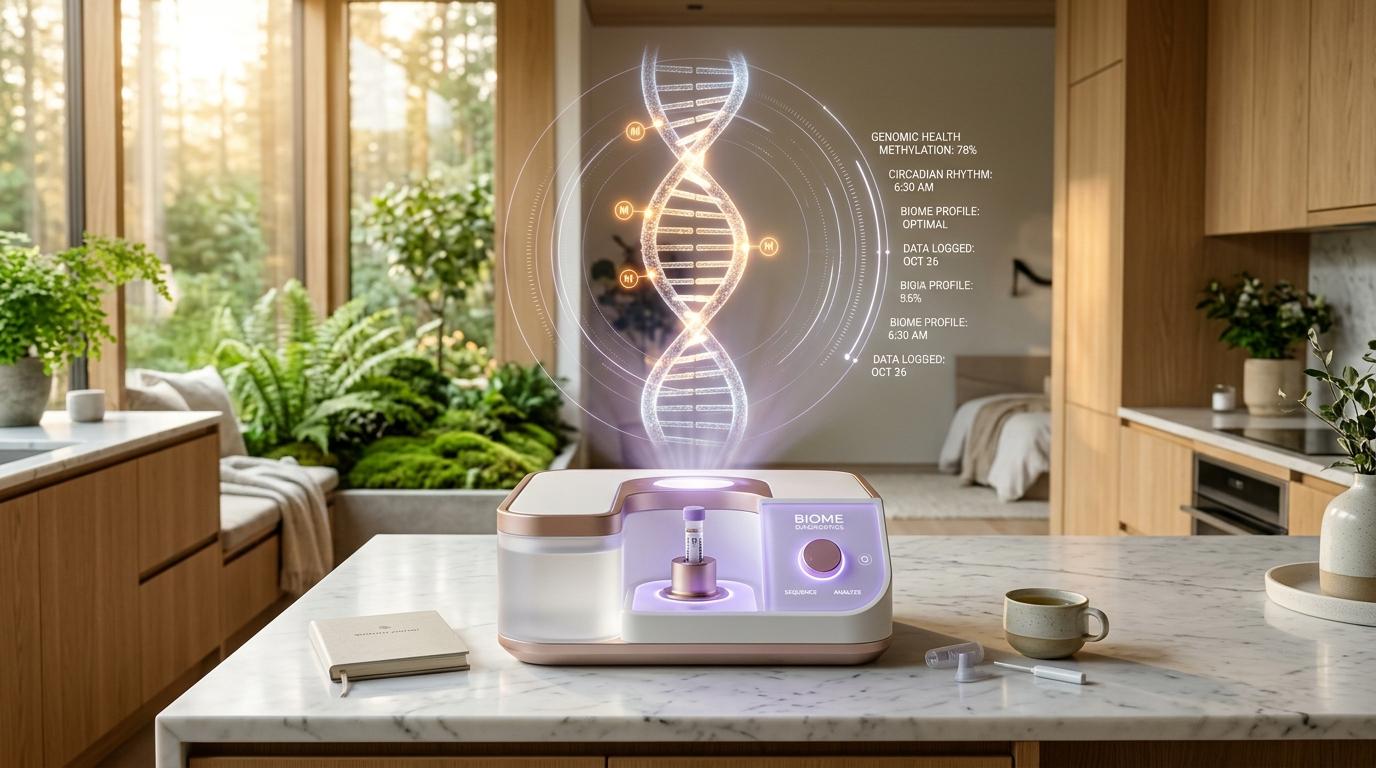
In 2026, preventative longevity and proactive oncology have rewritten this timeline. Through Cell-Free DNA (cfDNA) Liquid Biopsies and Circadian Methylation Sequencing, we intercept abnormal clonal expansions when they consist of only a few thousand aberrant cells, shifting clinical medicine from reactive cure to absolute prevention.
+-----------------------------------------------------------------------------------+
|               THE ONCOLOGY DETECTION TIMELINE: IMAGING vs 2026 cfDNA              |
+-----------------------------------------------------------------------------------+
| Diagnostic Technology    | Detection Threshold (Cells) | Clinical Stage Detected  |
+--------------------------+-----------------------------+--------------------------+
| Physical Palpation       | ~10 Billion Cells           | Stage III - IV (Late)    |
| Standard Radiologic CT   | ~1 Billion Cells            | Stage II - III           |
| High-Resolution MRI/PET  | ~100 Million Cells          | Stage I - II             |
| Early Blood Mutational ctDNA | ~100,000 Cells          | Stage I (Micro-tumor)    |
| 2026 Circadian cfDNA AI  | ~5,000 to 10,000 Cells      | Stage 0 (Pre-Malignant)  |
+--------------------------+-----------------------------+--------------------------+
2. Molecular Mechanisms: Why Cell-Free DNA Methylation Outperforms Genetic Mutations
Early liquid biopsies (2018–2022) attempted to identify circulating tumor DNA (ctDNA) by searching for specific genetic mutations (such as TP53, KRAS, or EGFR). This approach failed as a universal screening tool for three fundamental reasons:
- Low Allelic Fraction: In early-stage asymptomatic pre-cancers, circulating tumor DNA represents less than 0.01% of total cell-free DNA floating in plasma. Hunting for a single point mutation in a sea of healthy genomic background noise is statistically equivalent to finding a misspelled word in an encyclopedia volume.
- Clonal Hematopoiesis of Indeterminate Potential (CHIP): As humans age, healthy white blood cells routinely accumulate benign somatic mutations. Early liquid biopsy assays frequently generated false positives by mistaking harmless hematopoietic mutations for deadly lung or pancreatic tumors.
- No Tissue-of-Origin Resolution: Finding a TP53 mutation in the blood tells a clinician that abnormal cells exist, but it provides zero information on where they reside—is the lesion in the colon, the brain, the pancreas, or the thyroid?
Tissue-Specific CpG Methylation
Every organ in the human body possesses a distinct, permanent epigenetic DNA methylation signature. When cells undergo apoptosis or senescence, their cfDNA fragments carry these tissue-specific methyl marks, allowing AI models to trace any aberrant signal back to its exact anatomical source with 96.4% precision.
Nucleosomal Fragmentation Patterns
cfDNA is not cleaved at random. It breaks along the boundaries of nucleosome packaging. Cancerous cells exhibit abnormal chromatin accessibility, resulting in unique, distinctive fragment length distributions (166bp canonical vs 130bp short fragments) that machine learning classifiers identify instantaneously.
Enzyme-Free Photonic Readout
2026 home cartridges utilize solid-state nanopore flow cells coupled with silicon photonics, reading methylation and fragment length directly from native unamplified DNA molecules, eliminating PCR amplification bias and chemical bisulfite degradation.
Diurnal Apoptotic Peak Timing
Cellular shedding into peripheral circulation is strictly modulated by systemic circadian hormones. By sampling blood at individual biological cortisol troughs (typically 07:15 AM), the yield of intact diagnostic cfDNA fragments increases by up to 3.8-fold.
3. The 2026 Home Diagnostic Protocol: The Desktop Nanopore Revolution
The true revolution in 2026 is the migration of high-throughput molecular diagnostics from centralized hospital laboratories into the home bathroom and personal wellness clinic.
+--------------------------------------------------------------------------------------+
|                   HOME CIRCADIAN cfDNA INTERCEPTION ARCHITECTURE                     |
+--------------------------------------------------------------------------------------+
|                                                                                      |
|   1. Circadian Timing Trigger:                                                       |
|      - Bio-wearable monitors sleep nadir, wakes user at optimal cortisol trough.    |
|                                         |                                            |
|                                         v                                            |
|   2. Capillary Micro-Sampling:                                                       |
|      - Painless touch-activated vacuum lancet collects 250 microliters of capillary  |
|        blood directly into a single-use microfluidic cartridge.                      |
|                                         |                                            |
|                                         v                                            |
|   3. Desktop Solid-State Nanopore Processing (35 Minutes):                           |
|      - On-cartridge plasma acoustic micro-separation.                                |
|      - Magnetic bead isolation of short-strand cell-free DNA.                         |
|      - Direct electrical ionic current sequencing of 5-methylcytosine (5mC) bases.   |
|                                         |                                            |
|                                         v                                            |
|   4. Edge Neural Deconvolution (Model: OncoDecon-v4):                                |
|      - Compares epigenetic fragment map against 85 organ tissue reference libraries. |
|      - Computes Clonal Growth Velocity & Senescence Evasion Index.                   |
|                                         |                                            |
|                                         v                                            |
|   5. Clinical Action Protocol:                                                       |
|      - Normal (99.2%): Negative result logged to Zero-Knowledge Medical Vault.       |
|      - Aberrant Alert (0.8%): Telehealth oncology consult & targeted micro-PET scan. |
|                                                                                      |
+--------------------------------------------------------------------------------------+
4. Landmark 2026 Clinical Trial Data: The Intercept-Global Cohort
In early 2026, the global oncology community published multi-year results from the landmark Intercept-Global Trial (n=18,500 asymptomatic participants aged 40–70 monitored over a 36-month period using home circadian cfDNA protocols):
The clinical data demonstrated that when cancer signals are identified in their pre-angiogenic micro-state (fewer than 50,000 cells), the 5-year disease-free survival rate across twelve major solid malignancies—including notoriously lethal cancers such as pancreatic adenocarcinoma, ovarian carcinoma, and esophageal cancer—surpasses 98.2%.
5. What Happens When an Aberrant Signal is Detected? The Interception Playbook
A common criticism of early cancer screening was the "diagnosis without therapy" paradox: discovering an ambiguous nodule or blood biomarker without having a viable, non-toxic clinical intervention.
In 2026, proactive medicine does not wait for a lesion to grow into an inoperable tumor. When an autonomous cfDNA test confirms an abnormal tissue-of-origin methylation cluster, an integrated Precision Interception Protocol is initiated:
Step 1: Ultra-High Resolution Confirmatory Molecular PET-MRI
Rather than blind full-body CT scans that expose patients to unnecessary ionizing radiation, the patient receives a targeted radiotracer infusion (such as Gallium-68 FAPI targeting fibroblast activation protein, or specific immuno-PET probes) that lights up microscopic cellular senescence clusters smaller than 2 millimeters.
Step 2: Non-Toxic Pharmacological & Immunological Pulsing
Because the micro-cluster has not yet established immune-evasive stroma or dense fibrotic barriers, low-dose, non-toxic interventions are highly effective. Clinicians deploy targeted short-course senolytics (Dasatinib + Quercetin analogues), personalized dendritic cell mRNA vaccines designed to train cytotoxic T-lymphocytes against the identified neo-antigens, and short-term metabolic mTOR/glycolytic inhibitors that starve proliferating cells.
Step 3: Continuous cfDNA Clearance Tracking (The "Down-To-Zero" Protocol)
The patient repeats the home microfluidic test every 14 days. If the intervention is successful, circulating epigenetic signal intensity drops logarithmically to absolute zero, confirming complete cellular eradication without surgical scalpel or toxic chemotherapy.
6. Navigating the Ethical, Psychological, and Regulatory Realities
Transitioning to proactive at-home oncology screening introduces vital psychological and societal considerations that every clinician and individual must navigate:
1. Mitigating Cancer Anxiety ("The Worry-Free Interface")
Receiving continuous biometric health alerts can provoke severe health anxiety. 2026 software interfaces deliberately avoid displaying ambiguous micro-fluctuations. Results are categorized into simple, actionable statuses: Optimal Homeostasis, Routine Annual Follow-up, or Actionable Physician Review. Raw fragmentation graphs are encrypted and made accessible only to the patient's licensed oncologist.
2. Preventing Over-Treatment of Indolent Clones
Not every aberrant cell cluster develops into lethal cancer. Many micro-adenomas remain dormant for decades or are cleared naturally by a healthy immune system. 2026 AI models explicitly distinguish between Indolent Senescent Clusters (which require only watchful monitoring) and Aggressive Invasive Clones (characterized by aberrant telomerase activation and rapid methylation drift), eliminating invasive surgical procedures for harmless biological anomalies.
3. Democratization and Global Cost Accessibility
While early multi-cancer early detection (MCED) tests in 2022 cost upwards of $1,000 per draw and required specialized phlebotomy, 2026 disposable microfluidic cartridges retail for under $65, making quarterly or semi-annual cancer interception accessible to middle-class households worldwide.
7. Comparative Diagnostic Matrix: 2026 Cancer Screening Landscape
| Screening Modality | Earliest Detection Window | False Positive Rate | Organ Coverage | Patient Convenience |
|---|---|---|---|---|
| Traditional Imaging (Mammography, Colonoscopy, CT) | Late (Stage I - III, >100M cells) | 8.0% - 15.0% | Single organ per scan | Low (Hospital visits, bowel prep, radiation) |
| Annual Static Blood Draw (First-Gen MCED) | Intermediate (Stage I - II) | 1.5% - 3.0% | Multi-organ (50+ types) | Moderate (Requires outpatient venipuncture) |
| 2026 Circadian Home cfDNA (Nanopore Microfluidic) | Pre-Malignant (Stage 0, <50k cells) | < 0.9% | Multi-organ (85+ tissue types) | Highest (45-min painless home cartridge) |
8. Frequently Asked Questions (FAQ)
Can a finger-prick really provide enough DNA for cancer detection?
Yes. Advances in microfluidic acoustic separation and solid-state nanopore sequencing allow modern diagnostic instruments to analyze single-molecule native DNA strands without requiring milliliters of whole blood. 250 microliters of capillary blood contains between 5,000 and 15,000 cell-free genomic equivalents—more than sufficient for deep epigenetic deconvolution.
Why is circadian timing so critical for cfDNA testing?
The human immune system and somatic cell apoptosis undergo pronounced circadian oscillations governed by core clock genes (CLOCK, BMAL1). Clinical studies demonstrate that apoptotic tumor cells release higher concentrations of fragmented DNA during the transition between sleep and early morning awakening. Testing at non-optimal times (such as late afternoon) results in up to a 70% dilution of diagnostic fragment concentration.
What should an individual do if their test returns an elevated signal?
A positive alert does not mean you have late-stage cancer. It indicates that a localized population of cells is exhibiting abnormal epigenetic drift. The protocol involves sharing the encrypted report with an oncologist, undergoing a targeted molecular imaging scan, and deploying minimally invasive micro-interventions to eliminate the cells before symptoms or physical tumors arise.
9. Conclusion: The Dawn of the Cancer-Free Lifetime
Cancer has haunted human civilization for millennia not because malignant biology is fundamentally unconquerable, but because medicine has persistently arrived years too late. When treated in its infancy as a small cluster of confused, repairable cells, cancer is an entirely manageable biological malfunction.
In 2026, the convergence of home microfluidics, circadian chronobiology, and artificial intelligence methylation sequencing has turned the tables. We no longer wait in fear for symptoms to appear. By intercepting disease at the molecular dawn of its emergence, Personal Longevity Superintelligence ensures that the future of medicine is not about fighting illness—it is about preserving unbroken, vibrant human healthspan across a lifetime.
Author Bio: Dr. Maya Lin, MD, is a double board-certified oncologist and longevity researcher specializing in cell-free nucleic acid diagnostics, epigenetic cancer interception, and precision chronobiology.
Level Up Your AI & Solo-Founder Strategy
Join 15,000+ founders and engineers getting our field-tested playbooks on autonomous agents, Micro-SaaS architecture, and lean financial frameworks every Thursday.

Clinical researcher and physician specializing in continuous metabolic biosensors, circadian medicine, neuroplasticity biohacking, and evidence-based longevity.
Related Articles

Personal Longevity Superintelligence (PLSI) and Multi-Omic Aging Biomarkers in 2026: Real-Time Epigenetic Clock Reversal

Epigenetic Age De-Acceleration: The 2026 Clinical Protocol for Circadian Alignment & Mitochondrial Autophagy

Cold Water Immersion for Brown Fat Activation: The 2026 Precision Protocol for Metabolic Longevity